

Molecular Profiling of Malaria Vectors Adapted to Toxic Petroleum Contaminated Ecosystems in Akwa Ibom, Nigeria Molecular Profiling of Malaria Vectors in Petroleum Contaminated Ecosystems
Article Sidebar
Main Article Content
Abstract
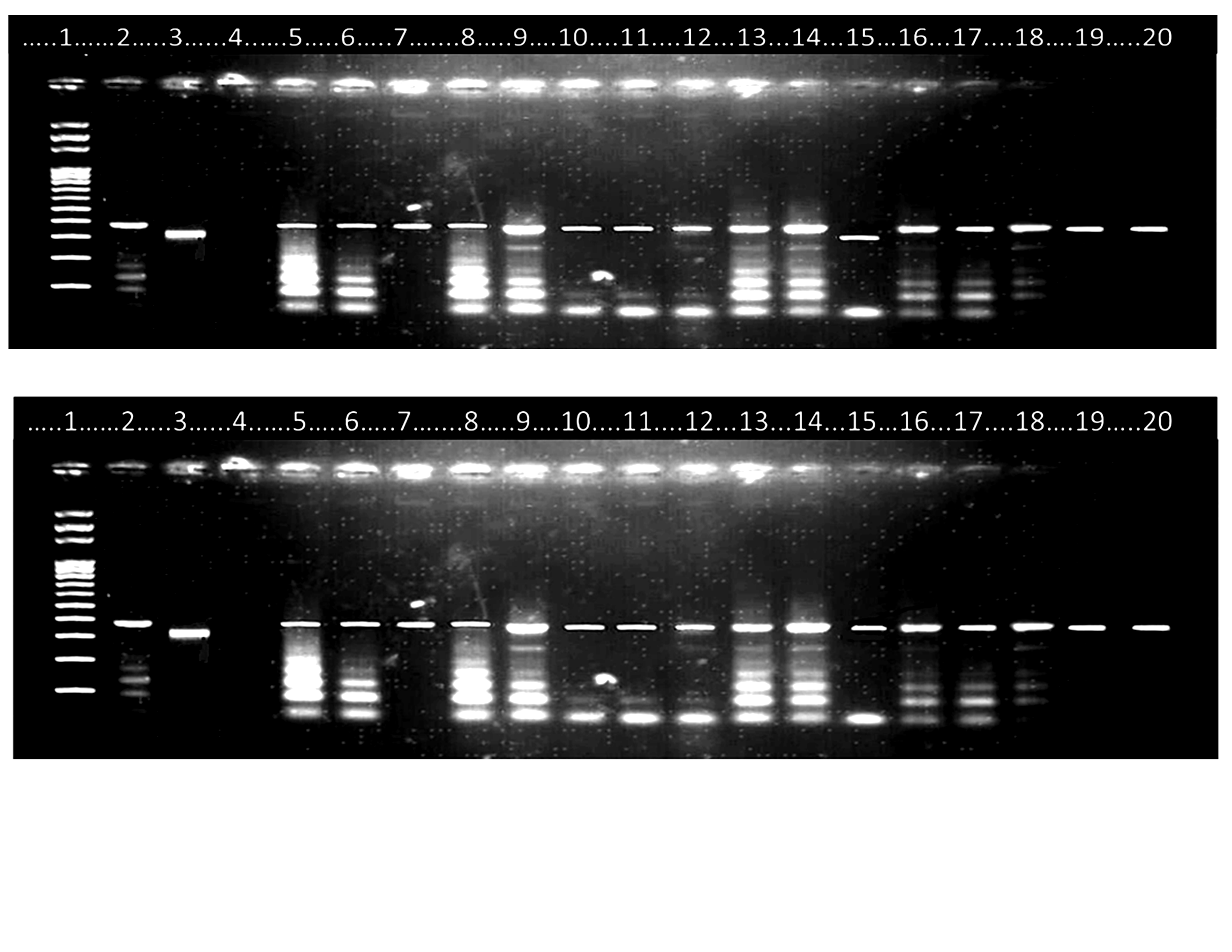
Petroleum pollution imposes ecological stress capable of altering malaria vector distribution and composition. Anopheles gambiae sensu stricto (s.s.), a principal malaria vector in Africa, belongs to the Anopheles gambiae complex, which comprises morphologically indistinguishable sibling species. Fixed X-chromosome differences separate An. gambiae s.s. into the Mopti (M) and Savanna (S) molecular forms, identifiable only using genetic markers. These forms exhibit differential adaptation to toxicologically stressed environments, potentially influencing local vector dynamics. Consequently, molecular tools are essential for accurate species and form identification. This study investigated Anopheles species adapted to petroleum-contaminated habitats in Akwa Ibom State, Nigeria, between March and November 2024. Larvae and pupae were collected from breeding sites in Eastern Obolo and Ibeno LGAs, reared to adults, and morphologically identified. Genomic DNA was extracted from individual mosquitoes and analyzed using Polymerase Chain Reaction (PCR) targeting the ribosomal DNA Internal Transcribed Spacer 2 (ITS2) region to confirm species complex membership and identify sibling species. Molecular forms of An. gambiae s.s. were determined using PCR–Restriction Fragment Length Polymorphism (PCR-RFLP). Physicochemical and hydrocarbon analyses of breeding-site water were also conducted. Hydrocarbon contamination was confirmed at all sites. All specimens belonged to the An. gambiae complex, with only An. gambiae s.s. and An. arabiensis detected. An. gambiae s.s. predominated (94.7%), and both M and S forms occurred sympatrically, with the M form dominant (80.3%). The dominance of An. gambiae s.s. and the Mopti form showed strong positive correlations with hydrocarbon concentrations, indicating hydrocarbon-driven selection. Persistent petroleum pollution appears to exert selective pressure favoring ecotoxicologically resilient Anopheles lineages, underscoring the importance of integrating molecular surveillance with environmental monitoring for effective malaria risk prediction.
Downloads
Article Details

This work is licensed under a Creative Commons Attribution-NonCommercial-NoDerivatives 4.0 International License.
References
Adeogun A., Babalola A.S, Okoko O.O. et al. (2023). Spatial distribution and ecological niche modeling of geographical spread of Anopheles gambiae complex in Nigeria using real time data. Sci Rep. 13(1):13679. doi: 10.1038/s41598-023-40929-5.
AIRS Nigeria Final Entomology Report. (2015). November 2014 – December 2015, Africa Indoor Residual Spraying Project, Abt Associates Inc., Lagos, Nigeria. 23p
AKS Ministry of Economic Development (2016). Projected population of Akwa Ibom State. www.aksgonline.com (Retrieved on 13th October 2017).
American Public Health Association (APHA) (2005). Standard method for examination of water and wastewater, 21st edn. Washington D. C. 120p.
Aribodor, D.N., Okezie, G.N., Ugwuanyi, I.K. et al. (2016). Species Composition and Infection Rate of Mosquito Vectors Following the Indoor Residual Spraying Exercise in three Communities in Awka North LGA of Anambra State, Nigeria. Annual Research and Review in Biology 10 (2): 1 - 8.
Aschale, Y., Getachew, A., Yewhalaw, D. et al. (2023).Systematic review of sporozoite infection rate of Anopheles mosquitoes in Ethiopia, 2001–2021. Parasites Vectors 16, 437.
Awolola, T.S., Oduola, A.O., Obansa, J.B. et al. 2007. Anopheles gambiae s.s. breeding in polluted water bodies in urban Lagos, southwestern Nigeria. Journal of Vector Born Diseases 44 (4): 241- 244
Awolola, T.S., Okwa, O., Hunt, R.H. et al. (2002). Dynamics of the malaria vector populations in coastal Lagos, southwestern Nigeria. Annals of Tropical Medicine and Parasitology 6 (1): 75 - 82.
Awolola. T.S. (2017). “Malaria, Mosquitoes and Man: The battle continuous…”.Nigerian Institute of Medical Research, Yaba, Lagos. Distinguished Lecture Series: 7th Edition. Health Information Commuinications International Limited, Lagos, Nigeria. 45p
Ayanlade, A., Adeoye, N.O., Babatimehin, O. (2010). Climate change /variability and malaria transmission in sub-Saharan Africa: A case of Nigeria. Report of the Royal Norwegian Society of sciences and Letters 250 anniversary Conference, June 21-24, 2010 Trondheim, Norway. [Online] Available: http://climsec.prio.no/papers/Climate%20Changeariability%20and%20malaria%20transmission%20in%20Sub-Saharan%20Africa %20A%20case%20of%20Nigeria.pdf. (Retrieved on 12th April 2025).
Bilali, K., Patrick, T., Johnson M., et al. (2012). Susceptibility status of malaria vectors to insecticides commonly used for malaria control in Tanzania, Tropical Medicine and International Health 17(6): 742-750.
Charles, H. and Godfray, J. (2013). Mosquito ecology and control of malaria. Journal of Animal Ecology, 82(1): 15 - 25.
della Torre, A., Fanello, C., Akogbeto, M. et al. (2001). Molecular evidence of incipient speciation within Anopheles gambiae s.s. in West Africa. Insect Molecular Biology, 10:9–18.
Diabaté, A., Dabiré, R.K., Heidenberger, K. et al. (2008). Evidence for divergent selection between the molecular forms of Anopheles gambiae: role of predation. BMC Evolutionary Biology 8(5): 122 - 129
Ekpo, N.D., Etim, O. E., Opara K. N. et al. (2018). Insecticide Susceptibility Profile of Malaria Vector From Crude Oil Impacted Coastal Area of Eastern Obolo LGA, Akwa Ibom State, Nigeria. World Journal of Applied Science and Technology, Vol. 10, No. 1b: 191 - 201.
Fanello, C., Santolamazza, F. and della Torre, A. (2002). Simultaneous identification of species and molecular forms of Anopheles gambiae complex by PCR-RFLP. Medical and Veterinary Entomology 16: 461 - 464.
Favia, G., della Torre, A., Bagayoko, M. et al. (1997). Molecular identification of sympatric chromosomal forms of Anopheles gambiae and further evidence of their reproductive isolation. Insect Molecular Biology, 6:377–383.
Favia, G., Lanfrancotti, A., Spanos, L. et al. 2001. Molecular characterization of ribosomal DNA polymorphisms discriminating among chromosomal forms of Anopheles gambiae s.s. Insect Molecular Biology, 10:19–23.
Imam, A.A. and Yusuf, D. (2015). Larval Productivity and Detoxication Enzymes Profile in Response to Physico-chemical Environmental Factors of Anopheles gambiae Breeding Ecologies in Nigeria. British Journal of Applied Science and Technology 5 (6): 2231 - 2843.
Jan, E.C. (2016). News from Africa: Novel Anopheline Species Transmit Plasmodium in Western Kenya. American Journal of Tropical medicine and Hygiene 94(2): 251 - 252.
Juliano, S.A. and Gravel, M.E. (2001). Predation and the evolution of preybehavior: an experiment with tree hole mosquitoes. Behavioral Ecology 13: 301 - 311.
Kabula, B., Derua, Y., Tungu, P., Massue, D.J. et al. (2011). Malaria entomological profile in Tanzania from 1950 to 2010: A review of mosquito distribution, vectorial capacity and insecticide resistance. Tanzanian Journal of Health Research, 13(1): 223 - 250.
Kats, L.B. and Dill, L.M. (1998). The scent of death: chemosensory assessment of predation risk by prey animals. Ecoscience, 5: 361 - 394.
Kent, R.J. 2006. The Mosquitoes of Macha, Zambi ohns Hopkins Malaria Research Institute; Department of Molecular Microbiology and Immunology, Johns Hopkins Bloomberg School of Public Health Baltimore, MD USA. 88p.
Koekemoer, Lizette, Hargreaves, K., Hunt, R.H. and Coetzee, Maureen. (2002). Identification of Anopheles parensis (Diptera: Culicidae) using ribosomal DNA internal transcribed spacer (ITS2) sequence variation. African Entomology. 10. 235-239.
Miriam DedeAma Dortey, Anisa Abdulai Isaac Kwame Sraku, Judith Dzifa Azumah et al. (2025). Exploring the metabolic and cuticular mechanisms of increased pyrethroid resistance in Anopheles gambiae S.l populations from Ghana. Sci Rep. 15: 18800
Molineaux, L. and Gramiccia, G. (1980). The Garki project. Research on the Epidemiology and Control of Malaria in the Sudan Savannah of West Africa World health Organization, Geneva. 88p.
Ogola, E.O., Fillinger, U., Ondiba, I.M. et al. (2018). Insights into malaria transmission among Anopheles funestus mosquitoes, Kenya. Parasites Vectors 11, 577.
Okogun, G.R.A., Bethran, E.B., Anthony, N. et al. (2003). Epidemiological Implications of Preferences of Breeding Sites of Mosquito species in Midwestern Nigeria. Annals of Agricultural and Environmental Medicine 10: 217 - 222.
Omoigberale Michael Osasele, Ifeanyi Maxwell Ezenwa and Ekene Biose and Ogaga Otobrise. (2020). Spatial Variations in the Physico-chemical Variables and Macrobenthic Invertebrate Assemblage of a Tropical River in Nigeria. arXiv: Quantitative Methods}, https://api.semanticscholar.org/CorpusID:219966162.
Pimenta P.F, Orfano A.S, Bahia A.C, et al. (2015). An overview of malaria transmission from the perspective of Amazon Anopheles vectors. Mem Inst Oswaldo Cruz., 110(1):23-47. doi: 10.1590/0074-02760140266.
Samdi, L.M., Anyanwu, G.I., Molta, N.B. et al. (2006). Determination of malaria vectorial status of Anopheles mosquitoes of the Sahel, Northeastern Nigeria. Journal of Life and Environmental Science, 8(1 and 2): 442 - 448.
Scott, J.A., Borgdon, W.C. and Collins, F. H. (1993). Identification of single specimen of Anopheles gambiae complex by the polymerase chain reaction, American Journal for Tropical Medicine and Hygiene, 49: 520 - 529.
Sinka, M., Bangs, M., Manguin, S. et al (2010). The dominant Anopheles vectors of human malaria in Africa, Europe and the Middle East: occurrence data, distribution maps and bionomic precision. Parasites and Vectors, 3: 117 - 122.
Takken W., Charlwood D. and Lindsay S.W. (2024). The behaviour of adult Anopheles gambiae, sub-Saharan Africa's principal malaria vector, and its relevance to malaria control: a review. Malar J. May 23(1):161. doi: 10.1186/s12936-024-04982-3.
Tovi, L. and Abdoulaye, D. (2008). The molecular forms of Anopheles gambiae: A phenotypic perspective. Infectious Genetics and Evolution, 8(5): 737 – 746.
WHO (2013). WHO recommendations for achieving universal coverage with long-lasting insecticidal nets in malaria control. Geneva, Switzerland. 79p
WHO (2024). Malaria. World malaria report 2024. https://www.who.int/news-room/fact-sheets/detail/malaria#:~:text=The%20WHO%20African%20Region%20carries%20a%20disproportionately%20high%20share%20of%20the%20global%20malaria%20burden. (Retrieved on 13th October 2025)
WHO (2015). Roll Back Malaria Partnership Secretariat. Action and investment to defeat malaria 2016–2030. For a malaria-free world. Geneva:(https://endmalaria.org/sites/default/files/RBM_AIM_Report_0.pdf (Retrieved on 16th October 2018).
Yawson, A.E., Mccall, P.J., Wilson, M. D. et al. (2004). Species abundance and insecticide resistance of Anopheles gambiae in selected areas of Ghana and Burkina Faso.