

Effects of Ethanol Extract of Justicia secunda on the Haematological Profile of Bromate-Intoxicated Albino Rats Effects of Ethanol Extract of Justicia secunda on the Haematological Profile
Article Sidebar
Main Article Content
Abstract
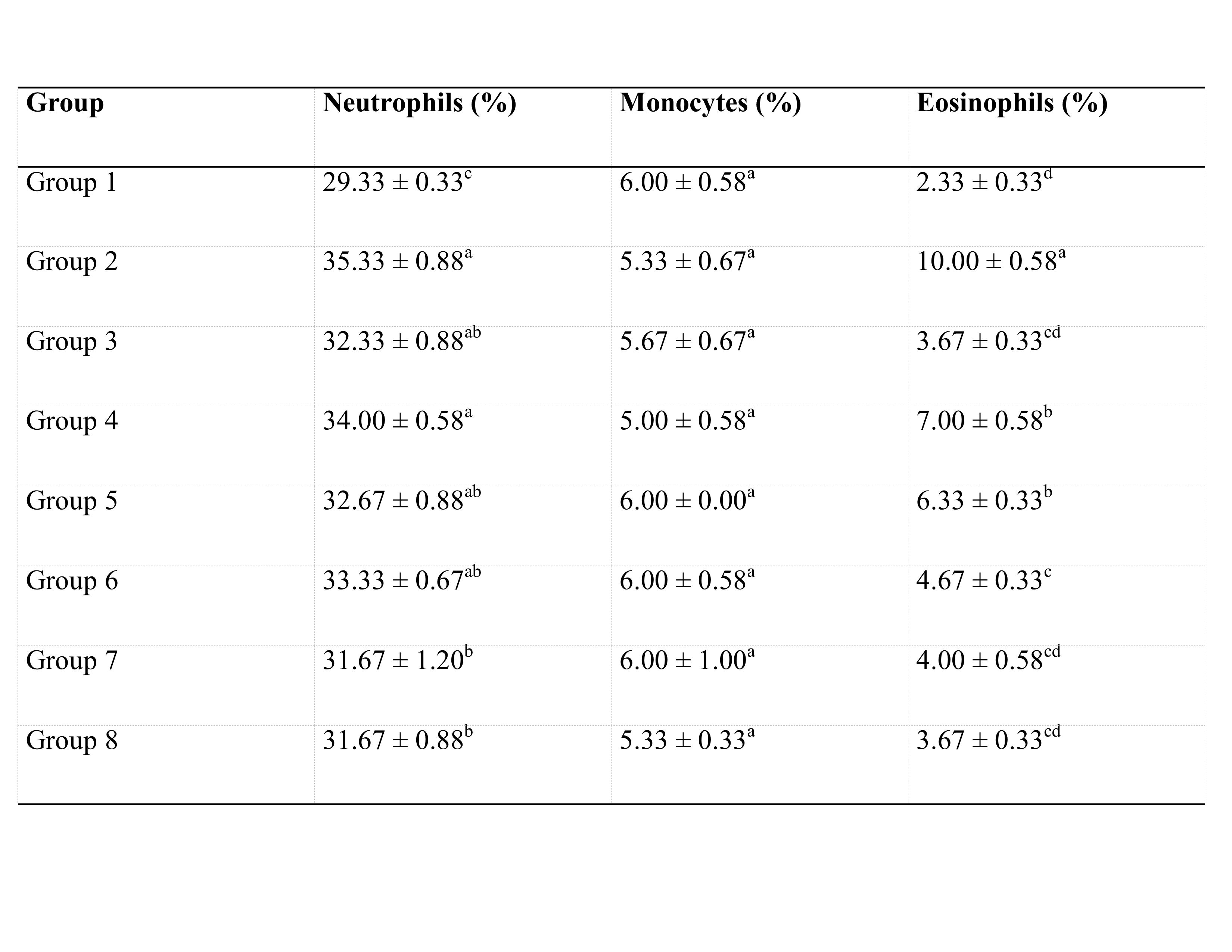
Potassium bromate (KBrO₃), a potent oxidizing agent widely used in food and industrial applications, has been implicated in various toxicological effects, including haematological disturbances. The search for plant-based therapeutics to mitigate these toxic effects has gained significant attention in recent years. This study investigates the protective potential of ethanolic leaf extract of Justicia secunda against potassium bromate-induced haematological alterations in albino rats. A total of thirty-two rats were divided into eight groups: a normal control, a negative control (bromate only), a positive control (bromate + Vitamin C), and four test groups treated with bromate and varying doses (200-1000 mg/kg) of J. secunda extract. Following 14 days of treatment, haematological parameters including packed cell volume (PCV), haemoglobin concentration (Hb), red blood cell (RBC) and white blood cell (WBC) counts, and differential counts were analyzed. Bromate exposure significantly reduced PCV, Hb, and RBC levels while increasing WBC and neutrophil counts, indicating haematotoxicity. Treatment with Justicia secunda extract significantly ameliorated these alterations in a dose-dependent manner, restoring values towards normal. These findings suggest that Justicia secunda possesses haematoprotective properties, potentially attributed to its antioxidant phytoconstituents, and may serve as a natural therapeutic agent against bromate-induced haematological toxicity.
Downloads
Article Details

This work is licensed under a Creative Commons Attribution-NonCommercial-NoDerivatives 4.0 International License.