

Electrolyte Imbalance and Renal Function Alterations in Type 1 and Type 2 Diabetes Mellitus: A Hospital-Based Cross-Sectional Study in South-Eastern Nigeria Electrolyte Imbalance and Renal Function Alterations in T1 and T2 Diabetes Mellitus
Article Sidebar
Main Article Content
Abstract
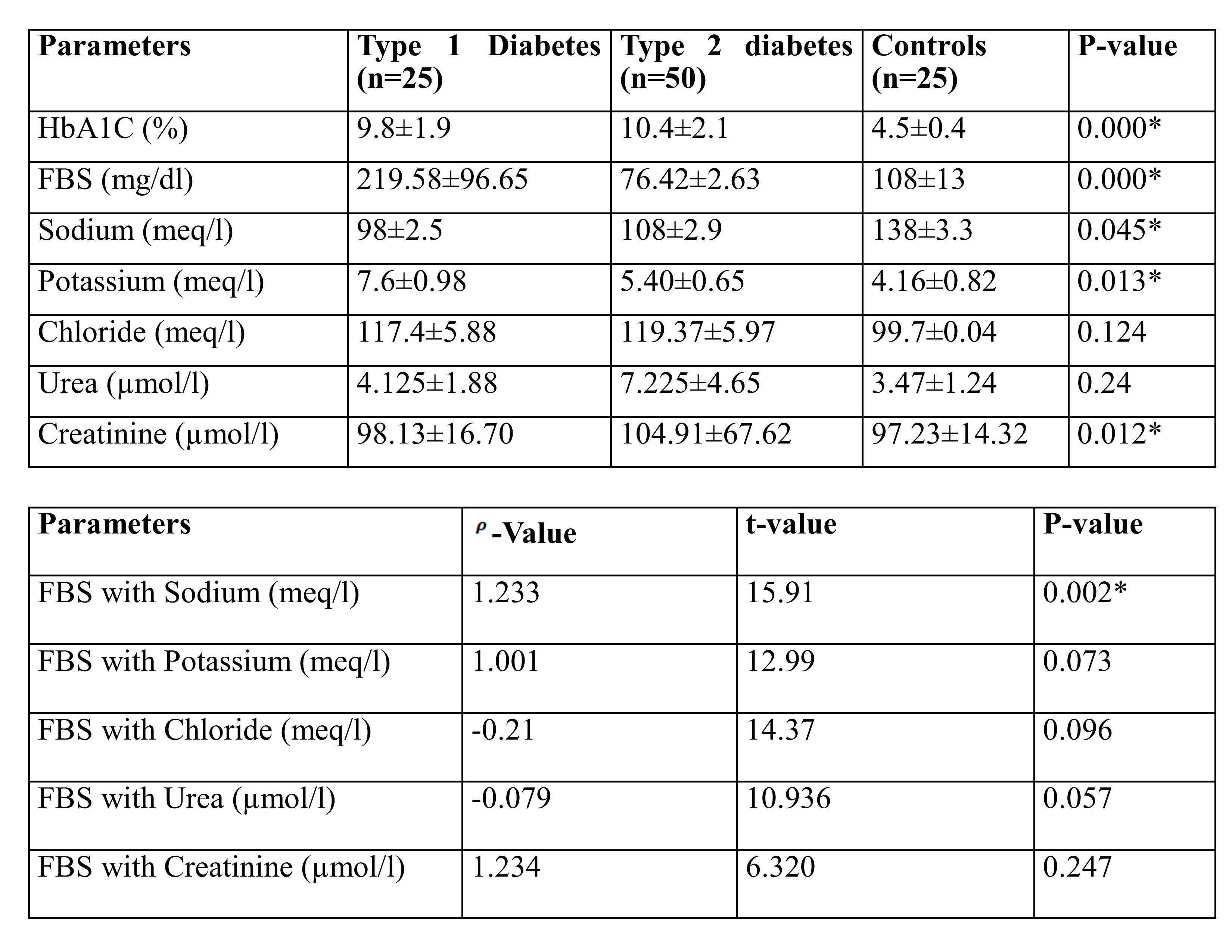
Diabetes mellitus predisposes patients to electrolyte imbalance and renal dysfunction, contributing to increased morbidity and mortality. Comparative data between type 1 and type 2 diabetes in South-eastern Nigeria remain limited. The aim of this study was to evaluate and compare electrolyte profiles and renal function markers in patients with type 1 and type 2 diabetes mellitus, and to determine their relationship with glycaemic control. A hospital-based cross-sectional study was conducted at ESUT Teaching Hospital, Nigeria, involving 100 participants: 25 with type 1 diabetes, 50 with type 2 diabetes, and 25 healthy controls. Fasting blood glucose, HbA1c, serum electrolytes (sodium, potassium, chloride), urea, and creatinine were analysed using standard methods. Data were evaluated using ANOVA and Spearman’s correlation (p < 0.05). Both diabetic groups showed significantly elevated fasting blood glucose and HbA1c compared to controls (p < 0.001). Serum sodium levels were significantly reduced, while potassium levels were elevated, particularly in type 1 diabetes (p < 0.05). Serum creatinine was significantly higher in diabetic patients, indicating early renal impairment. Fasting blood glucose showed significant positive correlations with sodium and potassium levels. Diabetes mellitus is associated with significant electrolyte disturbances and early renal dysfunction linked to poor glycaemic control. Routine monitoring of these parameters is essential for early detection and improved clinical management.
Downloads
Article Details

This work is licensed under a Creative Commons Attribution-NonCommercial-NoDerivatives 4.0 International License.
References
Eshetu, D., Tesfaye, B., & Mekonnen, Z. (2023). Electrolyte disturbances and renal function abnormalities among patients with diabetes mellitus: A systematic review. BMC Nephrology, 24(1), 112. Doi: https://doi.org/10.1186/s12882-023-03112-5
Elsawy, A. M., Hassan, M. A., & Abdelrahman, A. M. (2025). Diabetic kidney disease: Pathophysiology, biomarkers, and clinical implications. Journal of Diabetes Research, 2025, 1–12. Doi: https://doi.org/10.1155/2025/8893214
Holkar, S. R., Patil, M. S., & Kulkarni, S. P. (2024). Electrolyte imbalance in patients with uncontrolled diabetes mellitus. International Journal of Clinical Biochemistry and Research, 11(2), 89–95.
Kumar, R., Singh, A., & Verma, S. (2024). Glycaemic control, electrolyte imbalance, and renal dysfunction in diabetes mellitus. Clinical Diabetology, 13(1), 45–53. Doi: https://doi.org/10.5603/DK.a2024.0007
Ochei, J., & Kolhatkar, A. (2000). Medical laboratory science: Theory and practice. Tata McGraw-Hill Publishing Company.
Pawar, S. M., Jadhav, P. R., & Deshmukh, A. J. (2024). Renal function derangements in diabetes mellitus: A clinical perspective. Journal of Clinical and Diagnostic Research, 18(3), BC01–BC06.
Doi: https://doi.org/10.7860/JCDR/2024/67890.12345
Spencer, K. (1996). Analytical reviews in clinical biochemistry: The Jaffe reaction for creatinine. Annals of Clinical Biochemistry, 33(1), 1–14. Doi: https://doi.org/10.1177/000456329603300101
Taylor, A. J., & Vadgama, P. (1992). Analytical reviews in clinical biochemistry: The estimation of urea. Annals of Clinical Biochemistry, 29(3), 245–264.https://doi.org/10.1177/000456329202900301