

Biodegradation potentials of husk-based low-density polyethylene composites by Actinomycetes apecies, Clostridium cellulolyticum, and their synergistic interaction
Article Sidebar
Main Article Content
Abstract
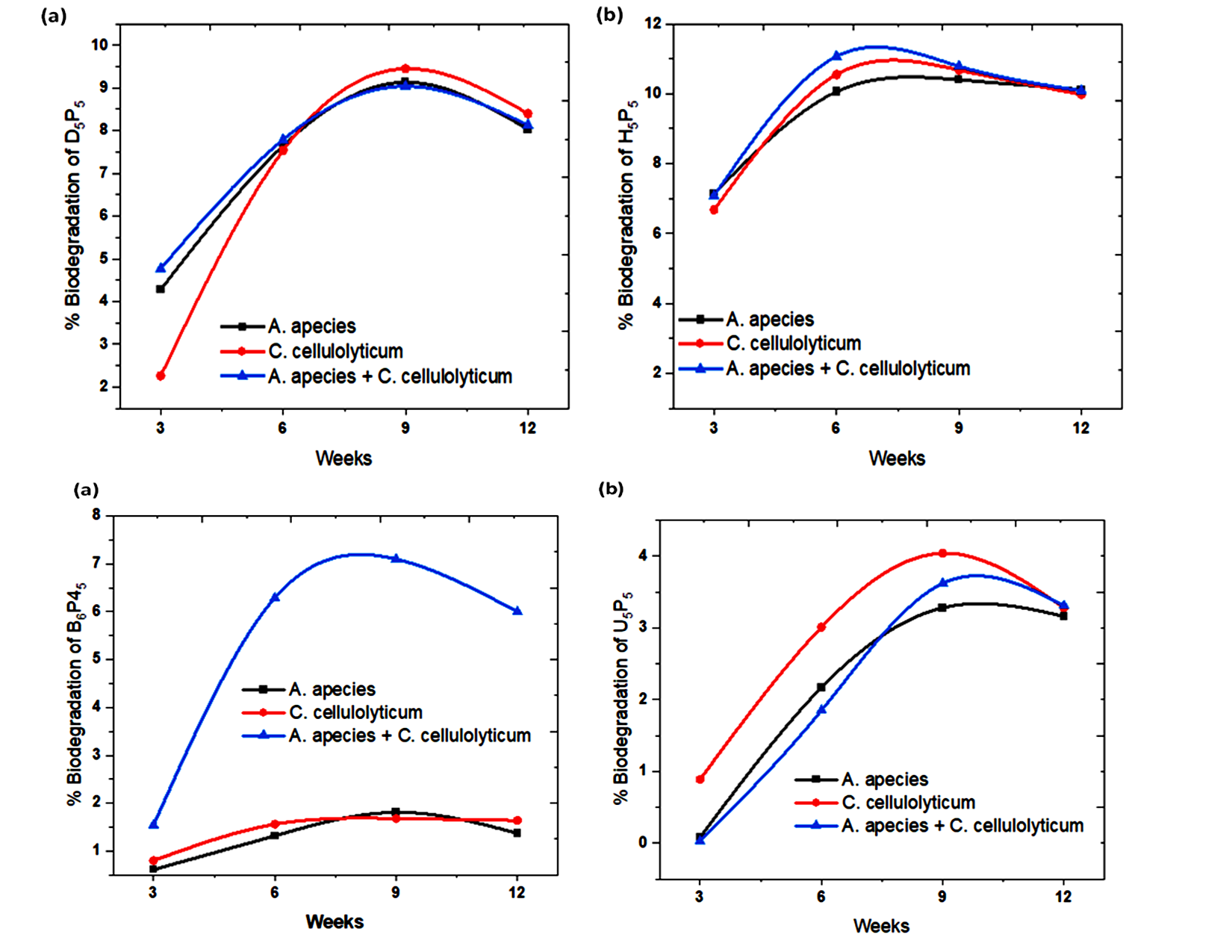
The environmental durability of conventional low-density polyethylene (LDPE) poses a significant challenge for waste management, prompting extensive research into more biodegradable alternatives and biologically driven degradation methods. The aim of this study, was to assess the biodegradation behavior of various Zea mays husk–polymer composites to evaluate their environmental degradability and potential for sustainable material applications. Four composites, delignified (D5P5), de-hemicellulolised (H5P5), bleached (B5P5), and untreated (U5P5), were exposed to Actinomycetes apecies and Clostridium cellulolyticum for a 12-week period. The results revealed that the de-hemicellulolised composite (H5P5) and bleached composite (B5P5) exhibited higher degradation rates compared to their untreated and delignified counterparts. This enhanced biodegradability was attributed to structural modification during pre-treatment, which increased microbial accessibility and enzyme penetration. The synergistic action of Actinomycetes apecies and Clostridium cellulolyticum further promoted cellulose breakdown, indicating their effectiveness in composite degradation. In contrast, the result also showed that the low-density polyethylene (LDPE) demonstrated minimal degradation (0.25%) after nine weeks, confirming its resistance to microbial activity. The findings demonstrate that pre-treatment of maize husk fibers significantly improves the biodegradability of polymer composites. De-hemicellulolised and bleached composites showed the highest microbial decomposition, making them promising candidates for eco-friendly applications. It is recommended that future studies focus on optimizing pre-treatment processes and extending the biodegradation period to enhance microbial performance. The development of maize husk–based composites could serve as a viable alternative to non-biodegradable plastics in packaging and other industrial uses.
Downloads
Article Details

This work is licensed under a Creative Commons Attribution-NonCommercial-NoDerivatives 4.0 International License.