

Evaluation of antimicrobial, antioxidant, and phytochemical properties of Joshanda, a traditional herbal formation
Article Sidebar
Main Article Content
Abstract
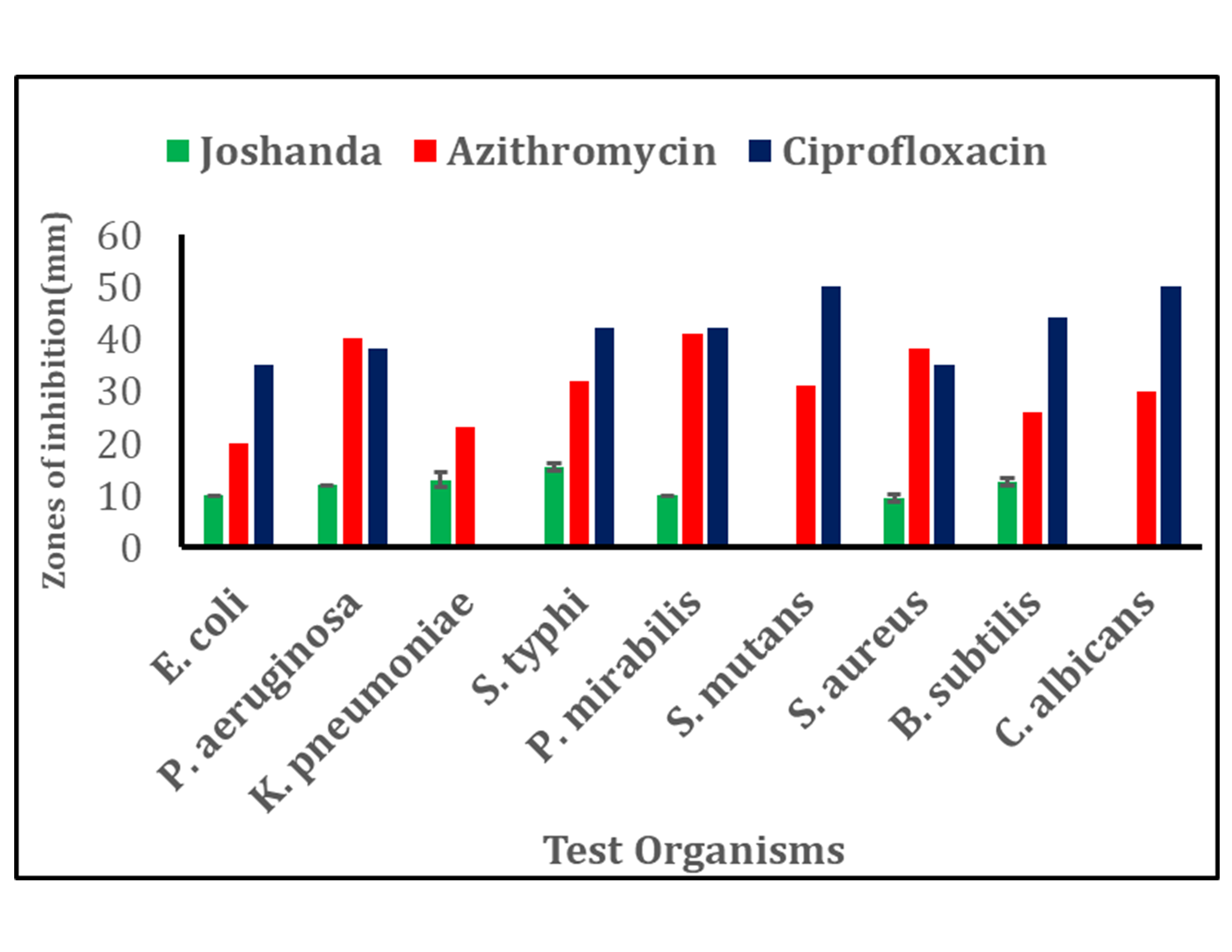
Humans have long used herbs to treat common health issues, such as the common cold, cough, and inflammation. Developing nations, such as India and Pakistan, continue to follow these practices. Joshanda is one of those herbs that is quite affordable and has few or no negative effects. This study aimed to screen and evaluate the biological activities of a commercial sample of Joshanda. Joshanda extract was obtained using ethanol solvent. The antimicrobial activity of Joshanda extract against pathogens, including Escherichia coli, Pseudomonas aeruginosa, Klebsiella pneumoniae, Salmonella typhi, Proteus mirabilis, Streptococcus mutans, Staphylococcus aureus, Bacillus subtilis, and strain of fungi Candida albicans, was examined using the agar well-diffusion method. The antioxidant capability of Joshanda was assessed using a DPPH radical scavenging activity assay. The ethanolic extract of Joshanda exhibited significant antimicrobial activity against S. typhi (15–16 mm) and P. aeruginosa (12 mm); however, it was ineffective against S. mutans and C. albicans. The inhibition zones were approximately half the size of those of the controls (Ciprofloxacin and Azithromycin). Joshanda exhibited a DPPH radical scavenging activity of (51.57%), approximately two times lower than that of (97.9%) for the ascorbic acid standard. Numerous bioactive phytochemicals, including alkaloids, flavonoids, saponins, sugars, carbohydrates, glycosides, cardiac glycosides, proteins, and amino acids, have been identified in the Joshanda extract. Gas chromatography-mass spectrometry (GC-MS) analysis revealed a wide variety of bioactive components, with a high percentage of methyl esters. The results suggest that Joshanda possesses medicinal properties, probably due to the presence of bioactive compounds and phytochemicals. However, the antimicrobial and antioxidative capacities of Joshanda were far below the control standards. Future research should be conducted to determine the minimum inhibitory concentrations (MIC) and in vivo toxicity to ensure the safety of the utilization of Joshanda herbal formulation.
Downloads
Article Details

This work is licensed under a Creative Commons Attribution-NonCommercial-NoDerivatives 4.0 International License.