

Possible Alterations of Changes in Weight, Appetite and Reproductive Biomarkers of Female Wistar Rats Using Blends of Cucumber, Green Tea and Orlistat®Wistar rats
Article Sidebar
Main Article Content
Abstract
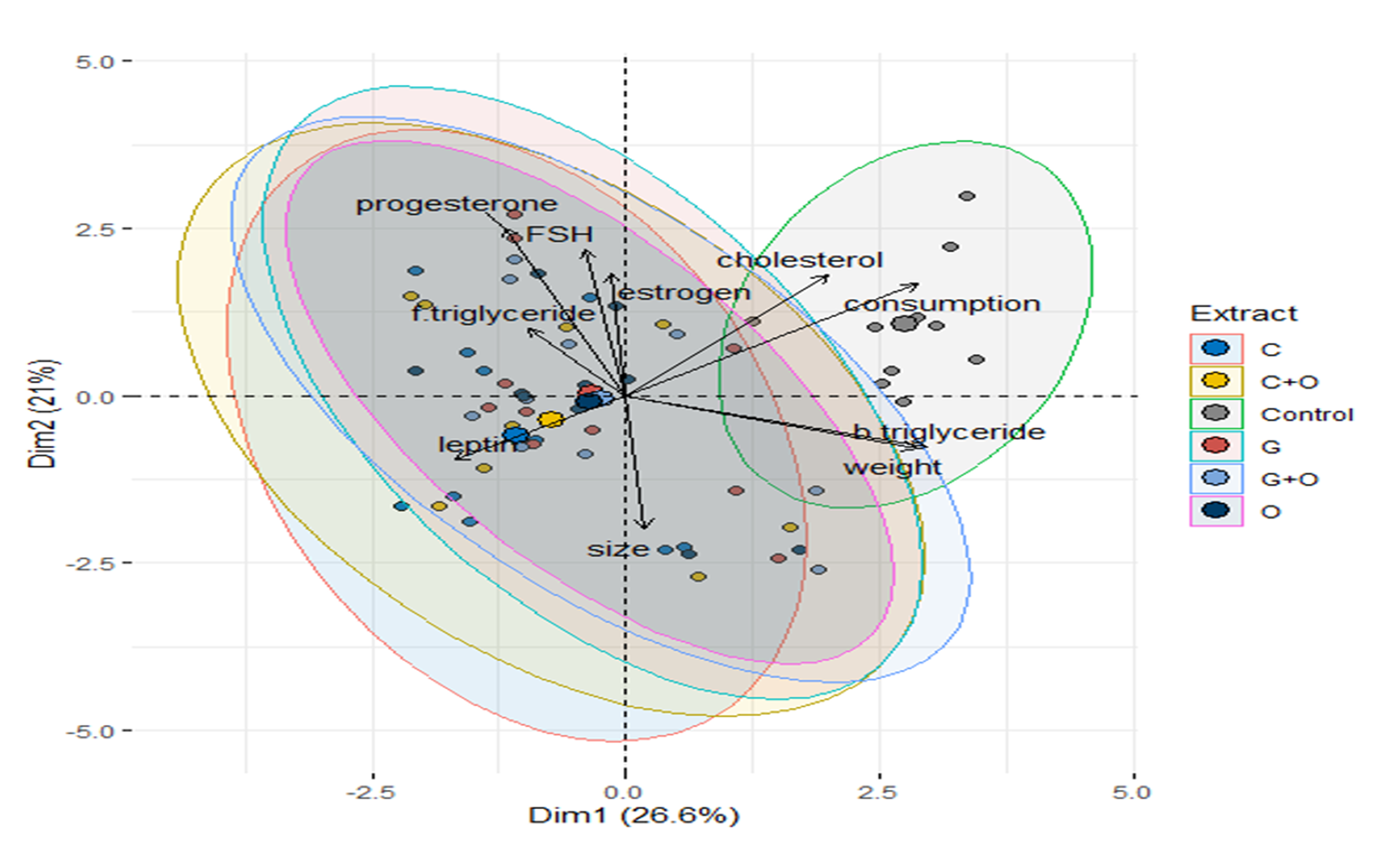
Anti-obesity interventions, including orlistat and plant-derived products such as cucumber (Cucumis sativus) and green tea (Camellia sinensis), promote weight reduction through mechanisms such as inhibition of digestive enzymes, appetite suppression, and reduced fat absorption. Despite their widespread use, information on their physiological and reproductive effects, particularly when administered in combination, remains limited. This study investigated the effects of orlistat (O), cucumber extract (C), green tea extract (G), and their combinations (C+O and G+O) on appetite regulation, body weight, lipid profile, and reproductive hormones in female Wistar rats. Specifically, the study aimed to investigate the effects of administering cucumber extract (C), green tea extract (G), orlistat (O), cucumber-orlistat (C+O), and green tea-orlistat (G+O) on: (i) serum leptin concentration; (ii) feed intake and body weight; (iii) serum cholesterol and triglyceride concentrations; and (iv) reproductive hormones (progesterone and follicle-stimulating hormone [FSH]) and the relationships among treatment, body mass index (BMI), estrogen, leptin, progesterone, and FSH in female Wistar rats. Data were analyzed using R. Cucumber-treated rats exhibited the lowest body weight, feed intake, and serum cholesterol, whereas both cucumber and green tea treatments reduced serum triglyceride concentrations. The highest leptin concentrations were observed in the cucumber and cucumber-orlistat groups, while progesterone was highest in the green tea-orlistat group, estrogen in the orlistat group, and FSH in the cucumber and cucumber-orlistat groups. Statistical analyses revealed that treatment significantly affected leptin concentrations, body weight and feed intake, lipid profile, and reproductive hormones. Furthermore, estrogen, BMI, treatment, and the period of administration significantly explained variation in body weight, leptin, FSH, and progesterone. Principal component analysis showed that body weight was positively associated with serum triglycerides but inversely associated with leptin, while leptin was negatively associated with serum cholesterol and feed intake. Overall, cucumber extract, either alone or in combination with orlistat, showed the greatest potential for improving body weight regulation while enhancing leptin and reproductive hormone concentrations. However, withdrawal of treatment was associated with a marked rebound in body weight, suggesting that the beneficial effects may not be sustained after discontinuation.
Downloads
Article Details

This work is licensed under a Creative Commons Attribution-NonCommercial-NoDerivatives 4.0 International License.
References
Adani VM, Ahmad N, Mukhtar H. Molecular targets for green tea in prostate cancer prevention. J Nutr 2013; 133: 2417S-2424S.
Ahima, R. S. & Flier, J. S. Leptin. Annu. Rev. Physiol. 62, 413–437 (2000).
Akhtar, P., Ahmad, I., Jameela, A., Ashfaque, M., & Begum, Z. (2020). Energizing Effectiveness of Cucumber (Khayarain) For Health. A Review Article. Journal of Emerging Technologies and Innovative Research, 7(11), 906-917.
Aljamal, A. (2017). Effect of Orlistat Drug and Green Coffee in Body Weight of Hypercholesterolemia Male Albino Rats. Journal of Chemical and Pharmaceutical Research, 9(12), 9-12.
Andong, F. A., Ejere, V. C., Agina, O. A., Ekere, S. O., & Mayowa, E. S. (2024). Assessment of biometrics and stress indicators of the adult Village Weaver birds (Ploceus cucullatus) during breeding and post-breeding seasons in Jos, Nigeria. Heliyon, 10(10).
Andong, F. A., Okwuonu, E. S., Melefa, T. D., Okoye, C. O., Nkemakolam, A. O., Hinmikaiye, F. F., Nwankpo, E.O. and Ozue, C. C. (2021). The consequence of aqueous extract of tobacco leaves (Nicotiana tabacum. L) on feed intake, body mass, and hematological indices of male wistar rats fed under equal environmental conditions. Journal of the American College of Nutrition, 40(5), 429-442.
Andong, F. A., Okwuonu, E. S., Melefa, T. D., Okoye, C. O., Nkemakolam, A. O., Hinmikaiye, F. F., Nwankpo, E.O. and Ozue, C. C. (2021). The consequence of aqueous extract of tobacco leaves (Nicotiana tabacum. L) on feed intake, body mass, and hematological indices of male wistar rats fed under equal environmental conditions. Journal of the American college of nutrition, 40(5), 429-442.
Andong, F. A., Okwuonu, E. S., Melefa, T. D., Okoye, C. O., Nkemakolam, A. O., Hinmikaiye, F. F., Nwankpo, E.O. and Ozue, C. C. (2021). The consequence of aqueous extract of tobacco leaves (Nicotiana tabacum. L) on feed intake, body mass, and hematological indices of male wistar rats fed under equal environmental conditions. Journal of the American College of Nutrition, 40(5), 429-442.
Andong, F. A., Orji, E. A., Ezenwaji, N. E., Nkemakolam, A. O., Melefa, T. D., Chukwurah, A. O., Oguche Moses Ojonugwa, M. O., Hinmikaiye, F.F. and Onwurah, A. I. (2021). Sub-acute oral toxicity study of aqueous extract of tobacco leaves (Nicotiana tabacum L.) on lipid profile, the tissue, and serum of the liver and kidney of male Wistar rats. Biomarkers, 26(2), 127-137.
Andong, F. A., Orji, E. A., Ezenwaji, N. E., Nkemakolam, A. O., Melefa, T. D., Chukwurah, A. O., Oguche Moses Ojonugwa, M. O., Hinmikaiye, F.F. and Onwurah, A. I. (2021). Sub-acute oral toxicity study of aqueous extract of tobacco leaves (Nicotiana tabacum L.) on lipid profile, the tissue, and serum of the liver and kidney of male Wistar rats. Biomarkers, 26(2), 127-137.
Andong, F. A., Ossai, N. I., Echude, D., Okoye, C. O., & Igwe, E. E. (2023). Motives, other meat sources and socioeconomic status predict number of consumers with preference for two antelope species served in Enugu-Nigeria. Global Ecology and Conservation, 42: 1-17
Aritonang, T. R., Rahayu, S., Sirait, L. I., Karo, M. B., Simanjuntak, T. P., Natzir, R., Sinrangg, A.W., Massi, M.N., Hatta, M and Kamelia, E. (2017). The role of FSH, LH, estradiol and progesterone hormone on estrus cycle of female rats. International Journal of Sciences: Basic and Applied Research, 35(1): 92-100.
Bialecka-Florjanczyk, E., Fabiszewska, A. U., Krzyczkowska, J., & Kurylowicz, A. (2018). Synthetic and natural lipase inhibitors. Mini reviews in medicinal chemistry, 18(8), 672- 683.
Camastra S, Vitali A, Anselmino M, Gastaldelli A, Bellini R, Berta R, Severi I, Baldi S, Astiarraga B, Barbatelli G, Cinti S, Ferrannini E. (2018). Publisher Correction: Muscle and adipose tissue morphology, insulin sensitivity and beta-cell function in diabetic and nondiabetic obese patients: effects of bariatric surgery. Sci Rep. 2018 8(1):8177
Chandel, N. S. (2021). Lipid Metabolism. Cold Spring Harb Perspect Biol. 13(9): 1−20.
D’silva, W. W., Biradar, P. R. and Patil, A. (2021). Luffa cylindrica: a promising herbal treatment in progesterone induced obesity in mice. Journal of Diabetes and Metabolic Disorders, 20(1): 329–340.
Das, S. K., & Karmakar, S. N. (2015). Effect of green tea (camellia sinensis l.) leaf extract on reproductive system of adult male albino rats. International journal of physiology, pathophysiology and pharmacology, 7(4), 178.
Delwatta SL, Gunatilake M, Baumans V, Seneviratne MD, Dissanayaka MLB, Batagoda SS, Udagedara AH, Walpola PB. Reference values for selected hematological, biochemical and physiological parameters of Sprague-Dawley rats at the Animal House, Faculty of Medicine, University of Colombo, Sri Lanka.Animal Model Exp Med. 2018;1(4):250– 254.
Elabarany, N. (2018). A comparative study of some haematological and biochemical parameters between two species from the Anatidae family within migration season. The Journal of Basic and Applied Zoology, 79(31):1–9.
Filippatos, T. D., Derdemezis, C. S., Gazi, I. F., Nakou, E. S., Mikhailidis, D. P. and Elisaf, M. S. (2008). Orlistat-Associated Adverse Effects and Drug Interactions. Drug Safety, 31(1), 53–65.
FOSS (2003) Hexane extraction of fat in feed, cereal grain and forage. FOSS, pp 1–9
Friedman, J. M. Leptin and the endocrine control of energy balance. Nat. Metab. 1, 754– 764 (2019).
Geliebter, A., Astbury, N. M., Aviram-Friedman, R., Yahav, E., & Hashim, S. (2014). Skipping breakfast leads to weight loss but also elevated cholesterol compared with consuming daily breakfasts of oat porridge or frosted cornflakes in overweight individuals: a randomized controlled trial. Journal of Nutritional Science, 3, e56.
George, G., Sridhar, SNC, S., & Paul, A. T. (2020). Investigation of synergistic potential of green tea polyphenols and orlistat combinations using pancreatic lipase assay-based synergy directed fractionation strategy. South African Journal of Botany, 135, 50–57.
Guerciolini R. Mode of action of orlistat. Int J Obes Relat Metab Disord. 1997 Jun;21 Suppl 3:S12-23. PMID: 9225172.
Hanefeld, M., & Sachse, G. (2002). The effects of orlistat on body weight and glycaemic control in overweight patients with type 2 diabetes: a randomized, placebo‐controlled trial. Diabetes, Obesity and Metabolism, 4(6), 415-423.
Hauner, D., Janni, W., Rack, B. and Hauner, H. (2011). The effect of overweight and nutrition on prognosis in breast cancer. Deutsches Ärzteblatt International, 108(47), 795.
Hirschberg, A. L. (2012). Sex hormones, appetite and eating behaviour in women. Maturitas, 71(3), 248-256
Holman, B. W., Bailes, K. L., Meyer, R. G., & Hopkins, D. L. (2019). Effect of modified Soxhlet (Soxtec) and Folch extraction method selection on the total lipid determination of aged beef. Journal of food science and technology, 56, 3957-3961.
Huss, J. M., Torra, I. P., Staels, B., Giguère, V. & Kelly, D. P. Estrogen-related receptor alpha directs peroxisome proliferator-activated receptor alpha signaling in the transcriptional control of energy metabolism in cardiac and skeletal muscle. Mol. Cell Biol. 24, 9079– 9091 (2004).
Ito, T., Yamamoto, Y., Yamagishi, N., & Kanai, Y. (2021). Stomach secretes estrogen in response to the blood triglyceride levels. Communications Biology, 4(1), 1364.
Jain SS, Ramanand SJ, Ramanand JB, Akat PB, Patwardhan MH, Joshi SR. Evaluation of efficacy and safety of orlistat in obese patients. Indian J Endocrinol Metab. 2011 Apr;15(2):99-104.
Kao YH, Hiipaka RA, Liao S. Modulation of endocrine systems and food intake by green tea epigallocatechin gallate. Endocrinology 2000; 141: 980-7.
Katimbwa, D. A., Oh, J., Jang, C. H., & Lim, J. (2022). Orlistat, a competitive lipase inhibitor used as an antiobesity remedy, enhances inflammatory reactions in the intestine. Applied Biological Chemistry, 65(1), 47.
Khan, A., Raza, S., Khan, Y., Aksoy, T., Khan, M., Weinberger, Y., & Goldman, J. (2012). Current updates in the medical management of obesity. Recent patents on endocrine, metabolic & immune drug discovery, 6(2), 117-128.
Kuryłowicz, A. (2023). Estrogens in adipose tissue physiology and obesity-related dysfunction. Biomedicines, 11(3): 1-23
Li, R. W., Douglas, T. D., Maiyoh, G. K., Adeli, K., & Theriault, A. G. (2006). Green tea leaf extract improves lipid and glucose homeostasis in a fructose-fed insulin-resistant hamster model. Journal of ethnopharmacology, 104(1-2), 24-31.
Liu J, Zeng FF, Liu ZM, Zhang CX, Ling WH, Chen YM. (2013). Effects of blood triglycerides on cardiovascular and all-cause mortality: a systematic review and meta-analysis of 61 prospective studies. Lipids Health Dis. 12:1-11
Liu, C., Guo, Y., Sun, L., Lai, X., Li, Q., Zhang, W., ... & Cao, F. (2019). Six types of tea reduce high-fat-diet-induced fat accumulation in mice by increasing lipid metabolism and suppressing inflammation. Food & function, 10(4), 2061-2074.
Allison, M. B. & Myers, M. G. Jr 20 years of leptin: connecting leptin signaling to biological function. J. Endocrinol. 223, T25–T35 (2014).
Mahmood, B., Mokhtar, M., & Esfandiar, S. (2015). The impact of green tea (Camellia sinensis) on the amount of gonadotropin hormones (LH, FSH) in immature female rats poisoned with cadmium chloride. Biomedical and Pharmacology Journal, 8(1), 261-268.
Mak, J. C. (2012). Potential role of green tea catechins in various disease therapies: progress and promise. Clinical and Experimental Pharmacology and Physiology, 39(3), 265-273.
Marcondes, F. K., Bianchi, F. J., & Tanno, A. P. (2002). Determination of the estrous cycle phases of rats: some helpful considerations. Brazilian journal of biology, 62, 609-614.
Morales A, Frei B, Leung C, Titman R, Whelan S, Benowitz-Fredericks ZM, Elliott K. H. (2020). Point-of-care blood analyzers measure the nutritional state of eighteen free-living bird species. Comp Biochem Physiol Part A Mol Integr Physiol 240:1−11
Muramatsu, K., FUKUYO, M., & Hara, Y. (1986). Effect of green tea catechins on plasma cholesterol level in cholesterol-fed rats. Journal of nutritional science and vitaminology, 32(6), 613-622.
Musial, C., Kuban-Jankowska, A., & Gorska-Ponikowska, M. (2020). Beneficial properties of green tea catechins. International journal of molecular sciences, 21(5), 1744.
National Research Council. (1995). Nutrient Requirements of Laboratory Animals,: Fourth Revised Edition, 1995. Washington, DC: The National Academies Press. doi.org/10.17226/4758.
National Research Council. (2011). Guide for the care and use of laboratory animals (8th ed.). National Academies Press.
Navratilova, H. F., Damayanthi, E., Ardiansyah, R., Fitriyana, I. N., Soejoedono, R. D., & Thenawidjaja, M. (2020). Fecal Lipid Content, Serum Lipid Profile, and Intra- Abdominal Fat Accumulation in Normal Rats Supplemented with Rice Bran Oil. Jurnal Gizi dan Pangan, 15(2), 119-124
Newell-Fugate, A. E. The role of sex steroids in white adipose tissue adipocyte function. Reproduction 153, R133–R149 (2017).
NHMRC. (2013). Australian dietary guidelines from the National Health and Medical Research Council.
Oboh, G., Ademiluyi, A. O., Ogunsuyi, O. B., Oyeleye, S. I., Dada, A. F., & Boligon, A. A. (2017). Cabbage and cucumber extracts exhibited anticholinesterase, antimonoamine oxidase and antioxidant properties. Journal of Food Biochemistry, 41(3):1−7
O'Meara, S., Riemsma, R., Shirran, L., Mather, L., & Ter Riet, G. (2004). A systematic review of the clinical effectiveness of orlistat used for the management of obesity. Obesity Reviews, 5(1), 51-68.
Romero, L. M., Reed, J. M., & Wingfield, J. C. (2000). Effects of weather on corticosterone responses in wild free-living passerine birds. General and comparative endocrinology, 118(1), 113-122.
Omoba, O. S., & Onyekwere, U. (2016). Postharvest physicochemical properties of cucumber fruits (Cucumber sativus L) treated with chitosan-lemon grass extracts under different storage durations. African Journal of Biotechnology, 15(50), 2758-2766.
Peng, X., Zhou, R., Wang, B., Yu, X., Yang, X., Liu, K., & Mi, M. (2014). Effect of green tea consumption on blood pressure: A meta-analysis of 13 randomized controlled trials. Scientific reports, 4(1), 6251.
Pervin, M., Unno, K., Ohishi, T., Tanabe, H., Miyoshi, N., & Nakamura, Y. (2018). Beneficial effects of green tea catechins on neurodegenerative diseases. Molecules, 23(6), 1297.
Posridee, K., Chirinang, P., Oonsivilai, A., & Oonsivilai, R. (2023). Evaluation of Short-Term Toxicity and Cholesterol-Lowering Effects in Rats Exposed to Dietary Fiber Derived fromCassava Pulp. Foods, 12(22), 4074.
Pouadjeu, J. M., Tomášek, O., Kauzál, O., Nguelefack, T. B., & Albrecht, T. (2023). Sources of variation in baseline and stress-induced blood glucose levels in two free-living tropical passerine species. Journal of Vertebrate Biology, 72:1-15
Rajan, L., Radhakrishnan, A., Selleppan, G. and Mohankumar, S. K. (2021). Susceptible genetic polymorphisms and their association with adverse effects of orlistat therapy. Obesity Medicine, 25: 1−7
RBCM. (2023). Rat breeding colony management: Standard operating procedure #609 modified by the veterinary committee. pp. 4
Romero, L. M., Meister, C. J., Cyr, N.E., Kenagy, G. J. and Wingfield J. C. (2008). Seasonal glucocorticoid responses to capture in wild free-living mammals. American Journal of Physiology, Regulatory, Integrative Comparative Physiology, 294:614–622.
Samavat H, Newman AR, Wang R, Yuan JM, Wu AH, Kurzer MS. (2016). Effects of green tea catechin extract on serum lipids in postmenopausal women: a randomized, placebo-controlled clinical trial. Am J Clin Nutr., 104(6):1671-1682.
Saxton, R. A., Caveney, N. A., Moya-Garzon, M. D., Householder, K. D., Rodriguez, G. E., Burdsall, K. A., Long, J.N and Garcia, K. C. (2023). Structural insights into the mechanism of leptin receptor activation. Nature Communications, 14(1), 1797.
Subandi, S., Wijaya, M., Sudarmo, T. P. B. and Suarsini, E. (2018). Saponin isolates from cucumber (Cucumis sativus L.) fruit mesocarp and their activity as pancreatic lipase inhibitor. In AIP Conference Proceedings., 2021: 1-6.
Suckow, M.A., Weisbroth, S.H. & Franklin, C.L. (2005). The Laboratory Rat, 2nd Edition. San Diego, CA: Elsevier Academic Press.
Suzuki, T., Pervin, M., Goto, S., Isemura, M., & Nakamura, Y. (2016). Beneficial effects of tea and the green tea catechin epigallocatechin-3-gallate on obesity. Molecules, 21(10), 1305.
Thiex, N. J., Anderson, S., Gildemeister, B., & Collaborators: Adcock W Boedigheimer J Bogren E Coffin R Conway K DeBaker A Frankenius E Gramse M Hogan P Knese T MacDonald JM ller J Royle R Russell M Shafiee F Shreve B Sieh J Spann M Töpler E Watts M. (2003). Crude fat, hexanes extraction, in feed, cereal grain, and forage (Randall/soxtec/submersion method): collaborative study. Journal of AOAC International, 86(5), 899-908.
Torgerson, J. S., Hauptman, J., Boldrin, M. N., & Sjöström, L. (2004). XENical in the Prevention of Diabetes in Obese Subjects (XENDOS) Study. A randomized study of orlistat as an adjunct to lifestyle changes for the prevention of type 2 diabetes in obese patients. Clinical Diabetology, 5(2), 95-104.
Turner, R. T., Nesser, K. L., Philbrick, K. A., Wong, C. P., Olson, D. A., Branscum, A. J., & Iwaniec, U. T. (2022). Leptin and environmental temperature as determinants of bone marrow adiposity in female mice. Frontiers in Endocrinology, 13, 959743.
Tzotzas, T., Samara, M., Constantinidis, T., Tziomalos, K., & Krassas, G. (2007). Short-term administration of orlistat reduced daytime triglyceridemia in obese women with the metabolic syndrome. Angiology, 58(1), 26-33.
Ugwu, C and Suru, S. (2021). Cosmetic, Culinary and Therapeutic Uses of Cucumber (Cucumis sativusL.). IntechOpen. doi: 10.5772/intechopen.96051
Vangoori Y, Suresh BS, Midde ML, Anusha D, Uppala PK. A Review on Drug Induced Obesity and Rodent Experimental Models of Obesity in Animals. Maedica (Bucur). 2022 Sep;17(3):706-713.
Verhaegen, Ann A., and Luc F. Van Gaal. "Drugs that affect body weight, body fat distribution, and metabolism." Endotext [Internet] (2019).
Welt, C. K., Pagan, Y. L., Smith, P. C., Rado, K. B., & Hall, J. E. (2003). Control of follicle- stimulating hormone by estradiol and the inhibins: critical role of estradiol at the hypothalamus during the luteal-follicular transition. The Journal of Clinical Endocrinology & Metabolism, 88(4), 1766-1771.
Williams, D. J., Edwards, D., Hamernig, I., Jian, L., James, A. P., Johnson, S. K., & Tapsell, L. C. (2013). Vegetables containing phytochemicals with potential anti-obesity properties: A review. Food Research International, 52(1), 323-333.
Wong, M. D., van Eede, M. C., Spring, S., Jevtic, S., Boughner, J. C., Lerch, J. P., & Henkelman, R. M. (2015). 4D atlas of the mouse embryo for precise morphological staging. Development (Cambridge, England), 142(20), 3583–3591
Yang CS, Zhang J, Zhang L, Huang J, Wang Y. Mechanisms of body weight reduction and metabolic syndrome alleviation by tea. Mol Nutr Food Res. 2016 Jan;60(1):160- 74.
Yang, T. T and Koo, M. W. (1999). Chinese green tea lowers cholesterol level through an increase in fecal lipid excretion. Life Sciences, 66(5), 411-423.
Zhi J, Melia AT, Eggers H, Joly R, Patel IH. Review of limited systemic absorption of orlistat, a lipase inhibitor, in healthy human volunteers. J Clin Pharmacol 1995; 35: 1103-8.
Zierle-Ghosh, A & Jan, A. (2018). Physiology, body mass index. StatPearls Publishing.