

Comparative effect of aqueous extract of mango leaves (Mangifera indica) and glibenclamide® on physiological indices of Wistar Rats induced with type II diabetes
Article Sidebar
Main Article Content
Abstract
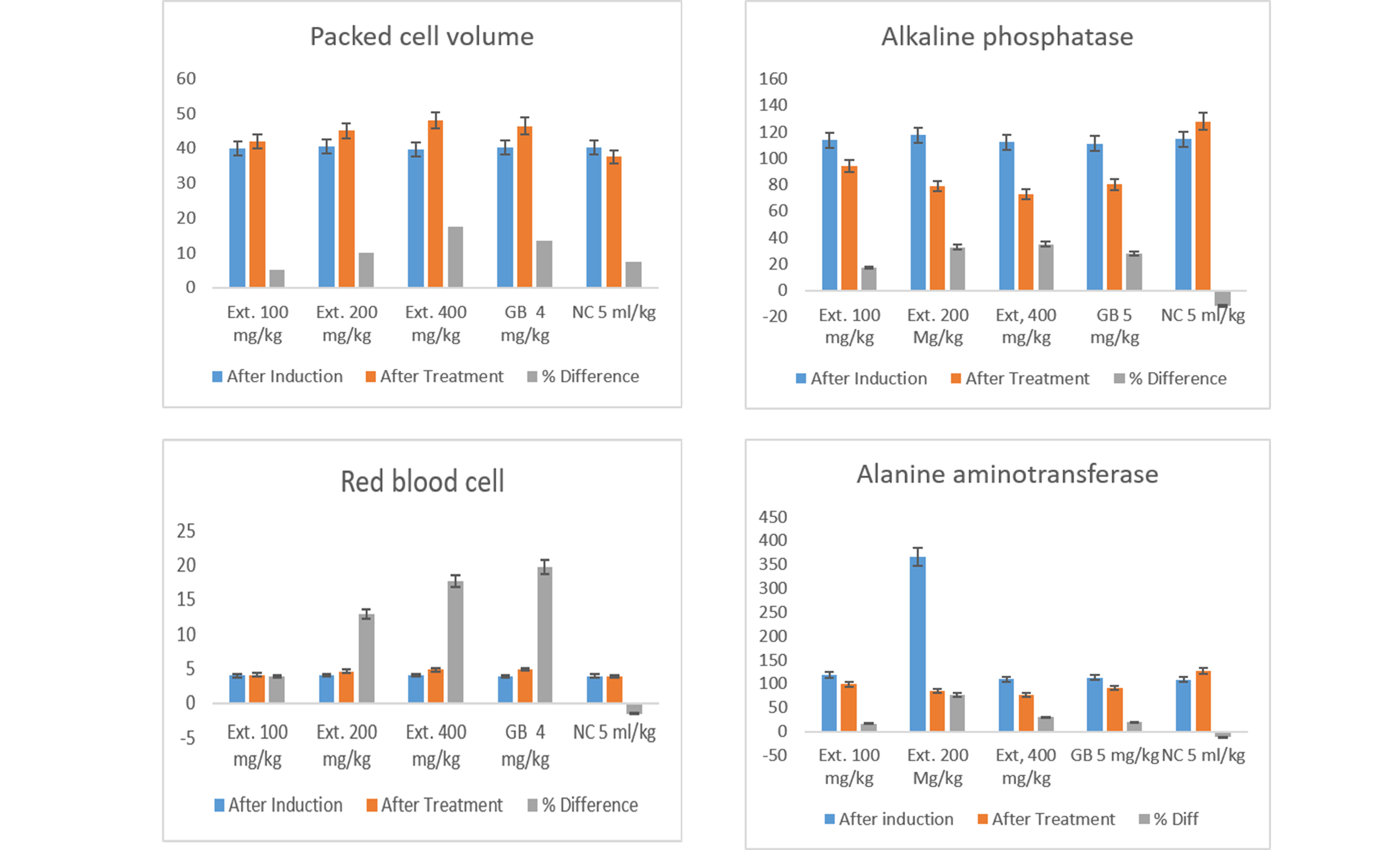
The high cost and side effects of synthetic antidiabetic agents necessitate exploring affordable plant-based alternatives. Mangifera indica L. (Anacardiaceae) leaves are traditionally used for their antidiabetic properties. The objective of the study was to comparatively evaluate the effects of aqueous extract of M. indica leaves and glibenclamide on body weight, blood glucose, liver function enzymes, and hematological indices in alloxan-induced diabetic male Wistar rats. Acute oral toxicity was assessed using the OECD 425 guideline in mice (n=5). Diabetes was induced in 30 male Wistar rats by single intraperitoneal injection of alloxan monohydrate (150 mg/kg). Diabetic rats (fasting blood glucose ≥ 200 mg/dL) were divided into five groups (n=6): Group I (diabetic control, distilled water), Groups II–IV (M. indica extract at 100, 200, and 400 mg/kg b.worally), and Group V (glibenclamide 5 mg/kg b.worally). A sixth group (n=6) served as non-diabetic normal control. Treatment lasted 28 days. The oral LD₅₀ of M. indica aqueous extract exceeded 5000 mg/kg, indicating wide safety margin. M. indica extract at 200 and 400 mg/kg b.wsignificantly (p < 0.05) reduced fasting blood glucose compared to the diabetic control, with the 400 mg/kg b.wdose showing comparable efficacy to glibenclamide by day 28. Unlike glibenclamide, which caused progressive weight gain, M. indica-treated rats maintained stable body weight. Both M. indica (200 and 400 mg/kg) and glibenclamide significantly (p < 0.05) restored altered hematological parameters (PCV, RBC, Hb) and reduced elevated liver enzymes (ALT, AST, ALP) toward normal levels. Aqueous extract of M. indica leaves demonstrates dose-dependent antidiabetic, hepatoprotective, and hematological restorative effects comparable to glibenclamide, with the advantage of weight neutrality. These findings support its potential as an affordable alternative adjunct in diabetes management.
Downloads
Article Details

This work is licensed under a Creative Commons Attribution-NonCommercial-NoDerivatives 4.0 International License.
References
Association of Official Analytical Chemist (AOAC). 2019. Official methods of analysis. Washington D.C: 40-57, 21.
Aiyelaage OO, Osamudiamen MP. 2009. Phytochemical screening for active compounds in Mangifera indica leaves from Ibadan, Oyo state. J Plant Sci and Res. 2(1): 11-13.
Ali BA, Alfa AA, Tijani KB, Idris ET, Unoyiza US, Junaidu Y. 2020. Nutritional health benefits and bioactive compounds of Mangifera indica (mango) leaves methanolic extracts. Asian Plant Res J. 6(2): 41-51.
Alagbaoso SO, Nwosu JN, Njoku NE, Ojukwu M, Okafor DC, Eluchie CN. 2015. Growth performance and haematology of albino rats fed varying inclusions of autoclaved Canavalia plagiosperma piper seed meal based-diets. Am J Food Nutr. 5(2): 35-48.
Alsir E, Aboagarib A, Yang R, Hua X, Siddeeg A. 2014. Chemical compositions, nutritional properties and volatile compounds of Guddaim (Grewia Tenax. Forssk) fiori fruits. JFNR. 2(4): 187-192.
Andong FA, Okwuonu ES, Melefa TD, Okoye CO, Nkemakolam AO, Hinmikaiye FF, Nwankpo EO, Ozue CC. 2020. The consequence of aqueous extract of tobacco leaves (Nicotiana tabacum. L) on feed intake, body mass, and hematological indices of male Wistar rats fed under equal environmental conditions. J Am Coll Nutr. 40: 429–442.
Andong FA, Orji EA, Ezenwaji NE, Nkemakolam AO, Melefa TD, Chukwurah AO, Ojonugwa OM, Hinmikaiye FF, Onwurah AI. 2021. Sub-acute oral toxicity study of aqueous extract of tobacco leaves (Nicotiana tabacum L.) on lipid profile, the tissue, and serum of the liver and kidney of male Wistar rats. Biomarkers. 26:127-137.
Anthony MU, Adebimpe AO. 2009. Hypoglycemic potential of the young leave methanolic extract of Magnifera indica in alloxan induced diabetic rats. Pak J Nutr. 8: 239-241.
Aryaeian N, Sedehi SK, Arablou T. 2017. Polyphenols and their effects on diabetes management: a review. Med J Islam Repub Iran. 31: 134-139.
Asmat U, Abad K, Ismail K. 2016. Diabetes mellitus and oxidative stress—a concise review. Saudi Pharm J. 24: 547-553.
Bahadoran Z, Mirmiran P, Azizi F. 2013. Dietary polyphenols as potential nutraceuticals in management of diabetes: a review. J Diabetes Metab Disord. 12:43-48.
Bale SS, Vernetti L, Senutovitch N, Jindal R, Hegde M, Gough A, McCarty WJ, Bakan A, Bhushan A, Shun TY, Golberg I, DeBiasio R, Usta BO, Taylor DL, Yarmush ML. 2014. In vitro platforms for evaluating liver toxicity. Exp Biol Med. 239:1180-1191.
Bassey OA, Lowry OH, Brock MJ. 1946. A method for the rapid determination of alkaline phosphates with five cubic millimetres of serum. J Biol Chem. 164: 321-325.
Bays HE, Chapman RH, Grandy S. 2007.The relationship of body mass index to diabetes mellitus, hypertension and dyslipidaemia: comparison of data from two national surveys. Int J Clin Pract. 61: 737-747.
Bello-Pérez LA, García-Suárez FJ, Agama-Acevedo E. 2007. Mango carbohydrates. Foods. 1 (1): 36-40.
Bolen S, Feldman L, Vassy J, Wilson L, Yeh HC, Marinopoulis S, Wiley C, Selvin E, Wilson R, Bass EB, Brancati FL. 2007. Systematic review: comparative effectiveness and safety of oral medications for type 2 diabetes mellitus. Ann Intern Med. 147:386-399.
Campbell AP, Rains TM. 2015. Dietary protein is important in the practical management of prediabetes and type II diabetes. J Nutr. 145:164-169.
Chen D, Wang MW. 2005. Development and application of rodent models for type II diabetes. Diabetes Obes Metab. 7: 307-317. Chikezie PC, Ojiako OA, Ogbuji AC. 2015. Oxidative stress in diabetes mellitus. Int J Biol Chem. 9: 92-109.
Descotes J. 1996. Immunotoxicity of pharmaceuticals: an introduction. Drug Inf J. 30: 271-274.
Doughari JH, Manzara S. 2008. In vitro antibacterial activity of crude leaf extracts of Mangifera indica Linn. Afr J Microbiol Res. 2:67-72.
Furuse M, Kimura C, Maybayo RT, Takahasi H, Okumura J. 1993. Dietery serbose prevents and improves hyperglycemia genetically diabetic mice. J Nutr. 123:59-65.
Gondi M, Rao UJSP. 2015. Ethanol extract of mango Mangifera indica L. peel inhibits α-amylase and α-glucosidase activities, and ameliorates diabetes related biochemical parameters in streptozotocin (STZ)-induced diabetic rats. J Food Sci Tech. 52:7883-7893.
Hui H, Tang G, Liang VW, Go VLW. 2009. Hypoglycemic herbs and their action mechanisms. Chin Med. 4: 11-14.
Humayun S, Ibrar M, Barkatullah AI. 2012. Comparison of three extracts of Fumeria indica for the evaluation of cytotoxic and phytotoxic activities. Int J Biosci. 2(12):112-119.
International Federation of Clinical Chemistry IFCC. 1980. Physicochemical quantities and units in clinical chemistry. J Clin Chem. Clin Biochem. 18:829-854.
Irondi EA, Oboh G, Akindahunsi AA. 2016. Antidiabetic effects of Mangifera indica Kernel Flour - supplemented diet in streptozotocin -induced type II diabetes in rats. Food Sci Nutr. 4:828-839.
Iwalokun BI, Alibi-Sofunde JA, Odunala T, Magbagbeola OA, Akinwande AI. 2006. Hepatoprotective and antioxidant activities of Vernonia amygdalina on acetaminophen- induced hepatic damage in mice. J Med Foods. 9:526-530.
James CS. 1996. Analytical chemistry of foods. New York, NY: Chapman and Hall. 56-58.
Jhaumeer Laulloo S, Bhowon MG, Soyfoo S, Chua LS. 2018. Nutritional and biological evaluation of leaves of Mangifera indica from Mauritius. Hindawi J Chem. 2018:1-9.
Jimmy EO, Udo ES. 2016. Timely dosage dependent ethanolic extract of Mangifera indica promotes blood cells development and weight gain. J Blood Res Haematol Dis. 1:1-4.
Kaneto, H., Katakami, N., Matsuhisa, M, Matsuoka, T. 2010. Role of reactive oxygen species in the progression of type II diabetes and atherosclerosis: a review. Hindawi Mediators Inflamm. 2010: 1-7.
Kato E, Kushibiki N, Inagaki Y, Kurokawa M, Kawabata J. 2017. Astilbe thunbergii reduces postprandial hyperglycemia in a type II diabetes rat model via pancreatic α-amylase inhibition by highly condensed procyanidins. Biosci Biotechnol Biochem. 81: 1699-1705.
Kavishankar GB, Lakshmidevi N, Murthy SM, Prakash HS, Niranjana SR. 2011. Diabetes and medicinal plants-a review. Int J Pharm Biomed Sci. 2(3): 65-80.
Kodangala C, Saha S, Kodangala P. 2010. Phytochemical studies of aerial parts of the plant Leucas lavandulaefolia. Pharm Chem. 2:434-7.
Larne J, Haynes Jr, RC. 1985. Insulin and oral hypoglycemic drugs; glucagon. Pharmacol Basis Ther. 5:1520-1523.
Liu Y, Dong M, Yang Z, Pan S. 2016. Anti-diabetic effect of citrus pectin in diabetic rats and potential mechanism via PI3K/Akt signaling pathway. Int. J. Biol. Macromol. 89: 484-488.
Lorke D. 1983. A new approach to practical acute toxicity testing. Arch Toxicol. 54:275-287.
Mahmood N. 2016. A review of α -Amylase inhibitors on weight loss and glycemic control in pathological state such as obesity and diabetes. Comp Clin Path. 25: 1253-1264.
Mansour HA, Newairy A, Yousef SA, Sheweita MI. 2002. Biochemical study on the effects of some Egyptian herbs in alloxan-induced diabetic rats. Toxicology. 170:221-228.
Marrelli M, Conforti F, Araniti F, Statti GA. 2016. Effects of saponins on lipid metabolism: a review of potential health benefits in the treatment of obesity: review. Molecules. 21(10):1404-1420.
Modak M, Dixit P, Lohnde J, Ghaskadbi S, Devasagayam TPA. 2007. Indian herbs and herbal drugs used for the treatment of diabetes. J Clin Biochem Nutr. 40:163-173.
Muruganandan S, Gupta S, Kataria M, Lal J, Gupta PK. 2002. Mangiferin protects the streptozotocin-induced oxidative damage to cardiac and renal tissues in rats. Toxicology. 176:165-173.
Naziroglu M, Cay M. 2001. Protective role intraperitoneally administered vitamin E and selenium on the oxidative defense mechanisms in rats with diabetes induced by streptozotocin. Biol Stress Elem Res. 47:475-488.
Ngo D, Ngo D, Vo TTN, Vo TS. 2019. Mechanism of action of Mangifera indica leaves for anti-diabetic activity. Sci. Pharm. 87:1-12.
Okpuzor J, Ogbunugafor HA, Kareem GK. 2009. Hepatic and hematologic effects of fractions of Globimetula braunii in normal albino rats. EXCLI J. 8:182-189.
Okorie AN, Nworie KM. 2018. Phytochemical screening and anti-inflammatory activities of methanolic leaf extract of Bauhinia monandra in animal models. Int J Pharmacol Phytochem Ethnomed. 11:7-16.
Phuyal N, Jha PK, Raturi PP, Rajbhandary S. 2020. Total phenolic, flavonoid contents, and antioxidant activities of fruit, seed, and bark extracts of Zanthoxylum armatum DC. Scientific World J. 2020: 1-7.
Rawi SM, Mourad IM, Sayed DA. 2011. Biochemical changes in experimental diabetes before and after treatment with Mangifera indica and Psidium guava extracts. Int J Pharm Biomed Sci. 2: 29-41.
Rao PS, Kalva S, Yerramilli A, Mamidi S. 2011. Free radicals and tissue damage: role of antioxidants. Free Rad Antiox. 1: 2-7.
Sellamuthu PS, Muniappan BP, Perumal SM, Kandasamy M. 2009. Antihyperglycemic effect of Mangiferin in streptozotocin induced diabetic rats. J Health Sci. 55: 206-214.
Shah KA, Patel MB, Patel RJ, Parmar PK. 2010. Mangifera indica (Mango): a review. Pharmacogn Rev. 4:42-46.
Sheel R, Nisha K, Kumar J. 2014. Preliminary phytochemical screening of methanolic extract of Clerodendron infortunatum. IOSRJAC. 7(1):10-13.
Sheela GL, Augusti KT. 1992. Antidiabetic effect of S-allyl cysteine sulphoxide isolated from garlic Allium sativa L. Indian J Experimental Biol. 30: 523-526.
Singh R, Devi S, Gollen R. 2015. Role of free radical in atherosclerosis, diabetes and dyslipidemia: larger-than-life. Diabetes Metab Res Rev. 31: 113-126.
Singh SN, Vats P, Suri S, Shyam R, Kumria MM, Ranganathan S, Sridharan K. 2001. Effect of antidiabetic extract of Catharanthus roseus on enzymic activities in streptozotocin induced diabetic rats. J Ethnopharmacol. 76:269-277.
Sofowora A. 1993. Medicinal Plants and Traditional Medicinal in Africa 2nd Ed. Sunshine House, Ibadan, Nigeria: Spectrum Books Ltd. 134-156.
Somkuwar DO, Kamble VA. 2013. Phytochemical screening of ethanolic extract of stem, leaves, flower and seed kernel of Mangifera indica L. Int Curr Pharm J. 4: 383-389.
Tijani KB, Alfa AA, Sezor AA. 2019. Studies on phytochemical, nutraceutical profiles and potential medicinal values of Allium sativum (Lilliaceae) on bacterial Meningitis. Int Neuropsychiatr Dis J. 13:1-15.
World Health Organization WHO. 2002. Traditional medicine strategy 2002-2005. World Health Organization, Geneva.
Wright PJ, Leatherwood PD, Plummer DT. 1972. Enzymes in rats: alkaline phosphatase. Enzymol. 42:317-327.
Yang J, Xian M, Su S, Zhao G, Nie Q, Jiang X, Zheng Y, Liu W. 2012. Enhancing production of bio-isoprene using hybrid MVA pathway and isoprene synthase in E. coli. PLoS One. 7(4): 1-7.
Zatalia SR. Sanusi H. 2013. The role of antioxidants in the pathophysiology, complications, and management of diabetes mellitus. Acta Med Indones. 45:141-147.
Zhang Y, Li J, Wu Z, Liu E, Shi P, Han L, Guo L, Gao X, Wang T. 2014. Acute and long-term toxicity of mango leaves extract in mice and rats. Evid Based Complement Altern Med. 2014:1-8.