

Molecular Characterization of PTEN Gene Alterations in Men with Prostate Cancer in Osun State
Article Sidebar
Main Article Content
Abstract
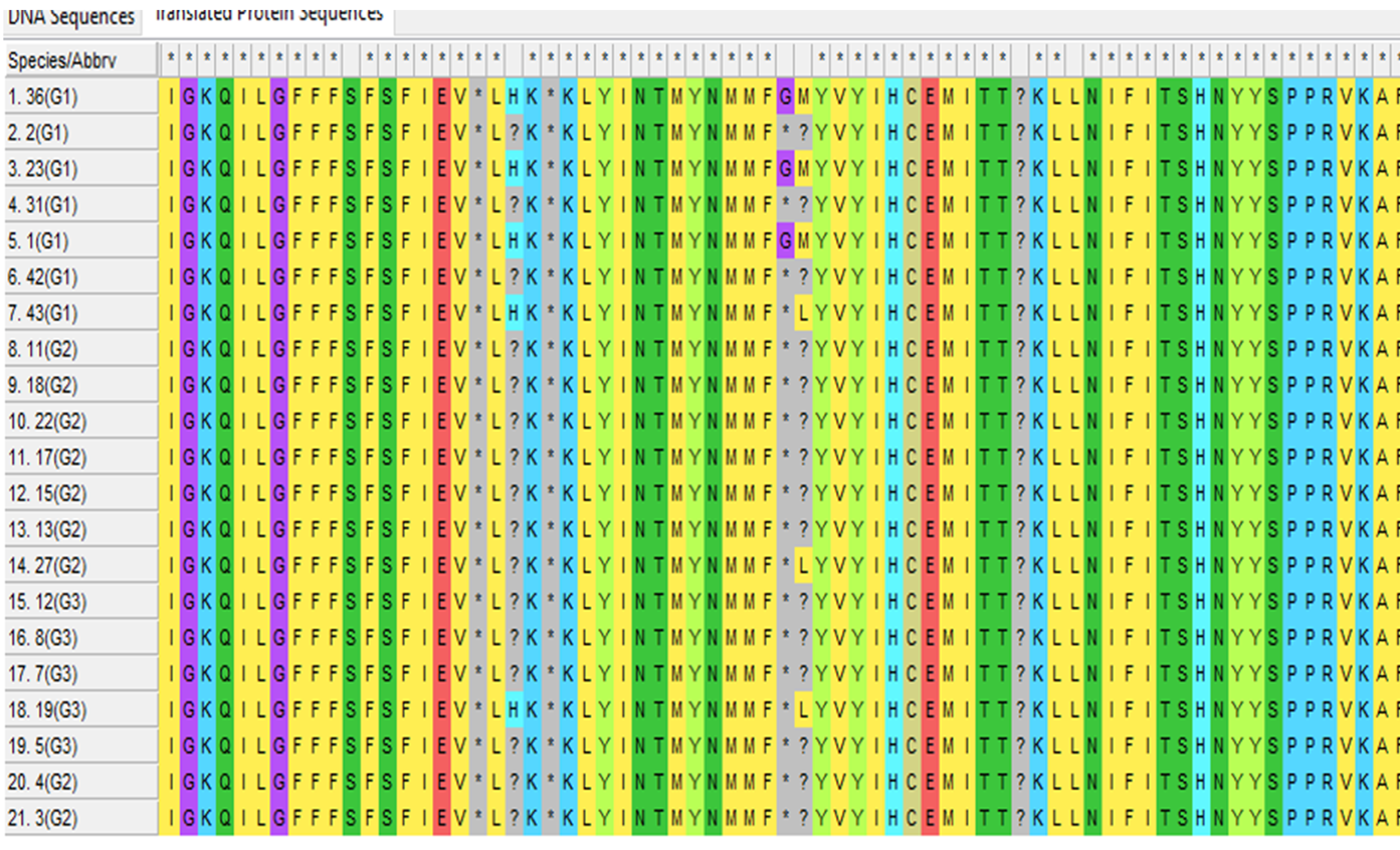
Prostate cancer is known to be the most common cancer in men and a slow-growing malignancy that primarily occurs in men over 50 years of age. The aim of this study was to determine the genomic alterations of PTEN genes amongst men with prostate cancer in Osun State. About 234 tissue blocks drawn from the archives of the Department of Histopathology at the Obafemi Awolowo University Teaching Hospital, Ile-Ife. This was an analytical experimental design. Previously processed and diagnosed prostate cancer blocks between the years of 2014 to 2019 were selected for this study. The corresponding reports were also sought for each selected paraffin wax block. DNA was extracted from the tissue using the Dellaporta DNA extraction protocol. PCR was carried out in a GeneAmp 9700 PCR System Thermal cycler with a PCR profile for each primer. The amplified DNA was sequenced using a Genetic Analyzer 3130xl sequencer from Applied Biosystems. The results revealed the occurrence of genomic alterations in the PTEN genes in the prostate cancer tissue. The PTEN gene was observed to have been altered on positions 220, 265 and 268 on the amino acid. In addition, C deletion was observed in position 220, the presence of G-T mutation was observed in position 265 and another C deletion was observed in position 268. Routine genomic screening of adult male above 45 years of age is advocated to detect early as well as manage and treat patients with prostatic cancer.
Downloads
Article Details

This work is licensed under a Creative Commons Attribution-NonCommercial-NoDerivatives 4.0 International License.
References
Álvarez-Garcia, V., Tawil, Y., Wise, H. M., & Leslie, N. R. (2019). Mechanisms of PTEN loss in cancer: It’s all about diversity. Seminars in Cancer Biology, 59, 66–79. DOI: 10.1016/j.semcancer.2019.02.001
Avwioro, O. G. (2014). Histochemistry and tissue pathology (3rd ed., pp. 154–157). Clavarianum Centre.
Barbieri, C. E., Baca, S. C., Lawrence, M. S., Demichelis, F., Blattner, M., Theurillat, J. P., White, T. A., Stojanov, P., Van Allen, E., Stransky, N., Nickerson, E., Chae, S. S., Boysen, G., Auclair, D., Onofrio, R. C., Park, K., Kitabayashi, N., MacDonald, T. Y., Sheikh, K., … Garraway, L. A. (2012). Exome sequencing identifies recurrent SPOP, FOXA1 and MED12 mutations in prostate cancer. Nature Genetics, 44(6), 685–689. doi: 10.1038/ng.2279.
Bleyer, A., Spreafico, F., & Barr, R. (2020). Prostate cancer in young men: An emerging young adult and older adolescent challenge. Cancer, 126(1), 46–57. doi: 10.1002/cncr.32498.
Bray, F., Ferlay, J., Soerjomataram, I., Siegel, R. L., Torre, L. A., & Jemal, A. (2018). Global cancer statistics 2018: GLOBOCAN estimates of incidence and mortality worldwide for 36 cancers in 185 countries. CA: A Cancer Journal for Clinicians, 68(6), 394–424. doi: 10.3322/caac.21492.
Charalampos, F., Ioannis, G., Athanasios, D., Konstantinos, N., & Athanasios, P. (2021). Clinical impact of combined PTEN and ERG rearrangements in localized prostate cancer. Archivio Italiano di Urologia e Andrologia, 93(1), 84–85. doi: 10.4081/aiua.2021.1.84.
Daly MB, Pilarski R, Yurgelun MB, Berry MP, Buys SS, Dickson P, Domchek SM, Elkhanany A, Friedman S, Garber JE, Goggins M, Hutton ML, Khan S, Klein C, Kohlmann W, Kurian AW, Laronga C, Litton JK, Mak JS, Menendez CS, Merajver SD, Norquist BS, Offit K, Pal T, Pederson HJ, Reiser G, Shannon KM, Visvanathan K, Weitzel JN, Wick MJ, Wisinski KB, Dwyer MA, Darlow SD. NCCN Guidelines Insights: Genetic/Familial High-Risk Assessment: Breast, Ovarian, and Pancreatic, Version 1.2020. J Natl Compr Canc Netw. 2020 Apr;18(4):380-391. doi: 10.6004/jnccn.2020.0017.
Darré, T., Djiwa, T., Kpatcha, T., Sonhaye, L., Amadou, A., Padaro, E., & Napo-Koura, G. (2022). Prostate cancers in men under the age of 50: About a series in Togo, Sub-Saharan Africa. BMC Cancer, 22, 1341. doi: 10.1186/s12885-022-10425-6.
Ekpo, N. D., Ubon, J. A., Ating, E. A., Udoinyang, E. P., Afia, U. U., Uno, A. U., Ezekiel, U. U., Essien, U. B., & Akpan, B. E. (2026). Molecular profiling of malaria vectors adapted to toxic petroleum contaminated ecosystems in Akwa Ibom, Nigeria. Journal of Biological Research and Biotechnology, 24(1), 434–444. https://doi.org/10.4314/br.v24i1.17
Feng, R., Sang, Q., Kuang, Y., Sun, X., Yan, Z., Zhang, S., Shi, J., Tian, G., Luchniak, A., Fukuda, Y., Li, B., Yu, M., Chen, J., Xu, Y., Guo, L., Qu, R., Wang, X., Sun, Z., Liu, M., … Wang, L. (2016). Mutations in TUBB8 and human oocyte meiotic arrest. New England Journal of Medicine, 374(3), 223–232. https://doi.org/10.1056/NEJMoa1510791
Ferlay, J., Ervik, M., Lam, F., Colombet, M., Mery, L., Piñeros, M., Znaor, A., Soerjomataram, I., & Bray, F. (2020). Global Cancer Observatory: Cancer Today. International Agency for Research on Cancer. https://gco.iarc.fr/today [Accessed October 4, 2025].
Flicek, P., Amode, M. R., Barrell, D., Beal, K., Billis, K., Brent, S., Carvalho-Silva, D., Clapham, P., Coates, G., Fitzgerald, S., Gil, L., Girón, C. G., Gordon, L., Hourlier, T., Hunt, S. E., Johnson, N., Juettemann, T., Kähäri, A. K., Keenan, S., … Searle, S. M. J. (2014). Ensembl 2014. Nucleic Acids Research, 42(D1), D749–D755. doi: 10.1093/nar/gkt1196.
Geybels, M. S., Fang, M., Wright, J. L., Qu, X., Bibikova, M., Klotzle, B., Fan, J. B., & Stanford, J. L. (2017). PTEN loss is associated with prostate cancer recurrence and alterations in tumor DNA methylation profiles. Oncotarget, 8(48), 84338–84448. doi: 10.18632/oncotarget.20940.
Gkountakos, A., Sartori, G., Falcone, I., Piro, G., Ciuffreda, L., Carbone, C., Tortora, G., Scarpa, A., Bria, E., & Milella, M. (2019). PTEN in lung cancer: Dealing with the problem, building on new knowledge and turning the game around. Cancers, 11, 1141–1149. doi: 10.3390/cancers11081141.
Hendricks, L. A. J., Hoogerbrugge, N., Schuurs-Hoeijmakers, J. H. M., & Vos, J. R. (2021). A review on age-related cancer risks in PTEN hamartoma tumor syndrome. Clinical Genetics, 99(2), 219–225. https://doi.org/10.1111/cge.13875
Jamaspishvili, T., Berman, D. M., Ross, A. E., Scher, H. I., De Marzo, A. M., Squire, J. A., & Lotan, T. L. (2018). Clinical implications of PTEN loss in prostate cancer. Nature Reviews Urology, 15(4), 222–234. doi: 10.1038/nrurol.2018.9.
Jia, Y., Chen, J., Zhong, J., He, X., Zeng, L., Wang, Y., & Li, Y. (2023). Novel rare mutation in a conserved site of PTPRB causes human hypoplastic left heart syndrome. Clinical Genetics, 103, 79–86. doi: 10.1111/cge.14234.
Jin-Tang, D., Chang-Ling, L., Tavis, W. S., & Henry, F. F. (2001). Mutations of PTEN/MMAC1 in primary prostate cancers from Chinese patients. Clinical Cancer Research, 7, 304–308.
Kmak, J. A., Agarwal, N., He, A. M., Miller, V. A., Ross, J. S., Pal, S. K., & Ali, S. M. (2020). Exceptional response to everolimus in a patient with metastatic castrate-resistant prostate cancer harboring a PTEN inactivating mutation. Case Reports in Oncology, 13(1), 456–461. doi: 10.1159/000506625.
Magdalena, M., Kołomańska, I. D., Nowak, Ł., Mazurek, Ł., Marciniak, J., Krajewska, A., & colleagues. (2022). PTEN gene mutations in malignant tumours: A systematic review and clinical implications for tumour treatment. Medical Studies, 38(4), 336–350. DOI: https://doi.org/10.5114/ms.2022.122392
Mashhadi, R., Pourmand, G., Mehrsai, A., Pakdel, S., Dialameh, H., Ahmadi, A., & Salimi, M. (2014). Effect of PTEN gene mutations and environmental risk factors on the progression and prognosis of bladder cancer. Iranian Journal of Public Health, 43(1), 56–61.
Naing, L., Winn, T., & Rusli, B. N. (2006). Practical issues in calculating the sample size for prevalence studies. Archives of Orofacial Sciences, 2(1), 9–14.
National Cancer Institute. (2021). National Cancer Institute (NCI). https://www.nih.gov/about-nih/what-we-do/nih-almanac/national-cancer-institute-nci [Accessed March 9, 2025].
Nicola, F., Elham, S., Konstantinos, V., Gabriella, G., Gianluca, L., Chiara, C., & colleagues. (2020). PTEN alterations and their role in cancer management: Are we making headway on precision medicine? Genes, 11, 719–722. doi: 10.3390/genes11070719.
Oba, U., Kohashi, K., Sangatsuda, Y., Oda, Y., Sonoda, K., Ohga, S., & Yamamoto, H. (2022). An efficient procedure for the recovery of DNA from formalin-fixed paraffin-embedded tissue sections. Biology Methods and Protocols, 7(1), bpac014. doi: 10.1093/biomethods/bpac014.
Ong, C. W., Maxwell, P., Alvi, M. A., McQuaid, S., Waugh, D., Mills, K. I., & Salto-Tellez, M. (2018). A gene signature associated with PTEN activation defines good prognosis intermediate risk prostate cancer cases. Journal of Pathology: Clinical Research, 4, 103–113. doi: 10.1002/cjp2.94.
Pilarski, R. (2019). PTEN hamartoma tumor syndrome: A clinical overview. Cancers, 11(6), 844–847. doi: 10.3390/cancers11060844
Raffone, A., Travaglino, A., Saccone, G., Viggiani, M., Giampaolino, P., Insabato, L., & Zullo, F. (2019). PTEN expression in endometrial hyperplasia and risk of cancer: A systematic review and meta-analysis. Archives of Gynecology and Obstetrics, 299, 1511–1524. doi: 10.1007/s00404-019-05123-x.
Robinson, D., Van Allen, E. M., Wu, Y. M., Schultz, N., Lonigro, R. J., Mosquera, J. M., Montgomery, B., Taplin, M. E., Pritchard, C. C., Attard, G., Beltran, H., Abida, W., Bradley, R. K., Vinson, J., Cao, X., Vats, P., Kunju, L. P., Hussain, M., Feng, F. Y., … Chinnaiyan, A. M. (2015). Integrative clinical genomics of advanced prostate cancer. Cell, 162(2), 454–462. doi: 10.1016/j.cell.2015.05.001.
Siddiqui, S., Akhter, N., Deo, S. V. S., Shukla, N. K., & Husain, S. A. (2016). A study on promoter methylation of PTEN in sporadic breast cancer patients from North India. Breast Cancer, 23(6), 922–931. doi: 10.1007/s12282-015-0665-0.
Singh, A., Pal, D. B., Mohammad, A., Alhazmi, A., Haque, S., & Yoon, T. (2022). Biological remediation technologies for dyes and heavy metals in wastewater treatment: New insight. Bioresource Technology, 343, 126154. doi: 10.1016/j.biortech.2021.126154.
Steinberg, J., Yap, S., Goldsbury, D., Nair-Shalliker, V., Banks, E., Canfell, K., & Jordan, S. J. (2021). Large-scale systematic analysis of exposure to multiple cancer risk factors and the associations between exposure patterns and cancer incidence. Scientific Reports, 11(1), 2343. doi: 10.1038/s41598-021-81463-6
Tekcham, D. S., Gupta, S., Shrivastav, B. R., & Tiwari, P. K. (2017). Epigenetic downregulation of PTEN in gallbladder cancer. Journal of Gastrointestinal Cancer, 48(1), 110–116. doi: 10.1007/s12029-017-9919-8.
Truong, M., Hollenberg, G., Weinberg, E., Messing, E. M., Miyamoto, H., & Frye, T. P. (2017). Impact of Gleason subtype on prostate cancer detection using multiparametric magnetic resonance imaging: Correlation with final histopathology. Journal of Urology, 198(2), 316–321. doi: 10.1016/j.juro.2017.01.077.
Usman, J., Abubakar Gusau, M., Abubakar, I., & Hussaini, S. (2026). Mutation in the quinolone resistance-determining region (QRDR) of the gyrA gene in ciprofloxacin-resistant Salmonella Typhi. Journal of Biological Research and Biotechnology, 24(1), 490–496. https://doi.org/10.4314/br.v24i1.23
Wilson, T. K., & Zishiri, O. T. (2024). Prostate cancer: A review of genetics, current biomarkers and personalised treatments. Cancer Reports, 7(10), e70016. doi: 10.1002/cnr2.70016.
Yazdani, Y., Farazmandfar, T., Azadeh, H., & Zekavatian, Z. (2016). The prognostic effect of PTEN expression status in colorectal cancer development and evaluation of factors affecting it: miR-21 and promoter methylation. Journal of Biomedical Science, 23, 9. https://doi.org/10.1186/s12929-016-0228-5.
Zlotta, A. R., Egawa, S., Pushkar, D., Govorov, A., Kimura, T., Kido, M., Takahashi, H., Kuk, C., Kovylina, M., Aldaoud, N., Fleshner, N. E., & Finelli, A. (2013). Prevalence of prostate cancer on autopsy: Cross-sectional study on unscreened Caucasian and Asian men. Journal of the National Cancer Institute, 105(14), 1050–1058. https://doi.org/10.1093/jnci/djt151.