

Mutation in the Quinolone Resistance-Determining Region (QRDR) of the gyrA Gene in Ciprofloxacin-Resistant Staphylococcus aureus Quinolone Resistance-Determining Region (QRDR) of the gyrA Gene
Article Sidebar
Main Article Content
Abstract
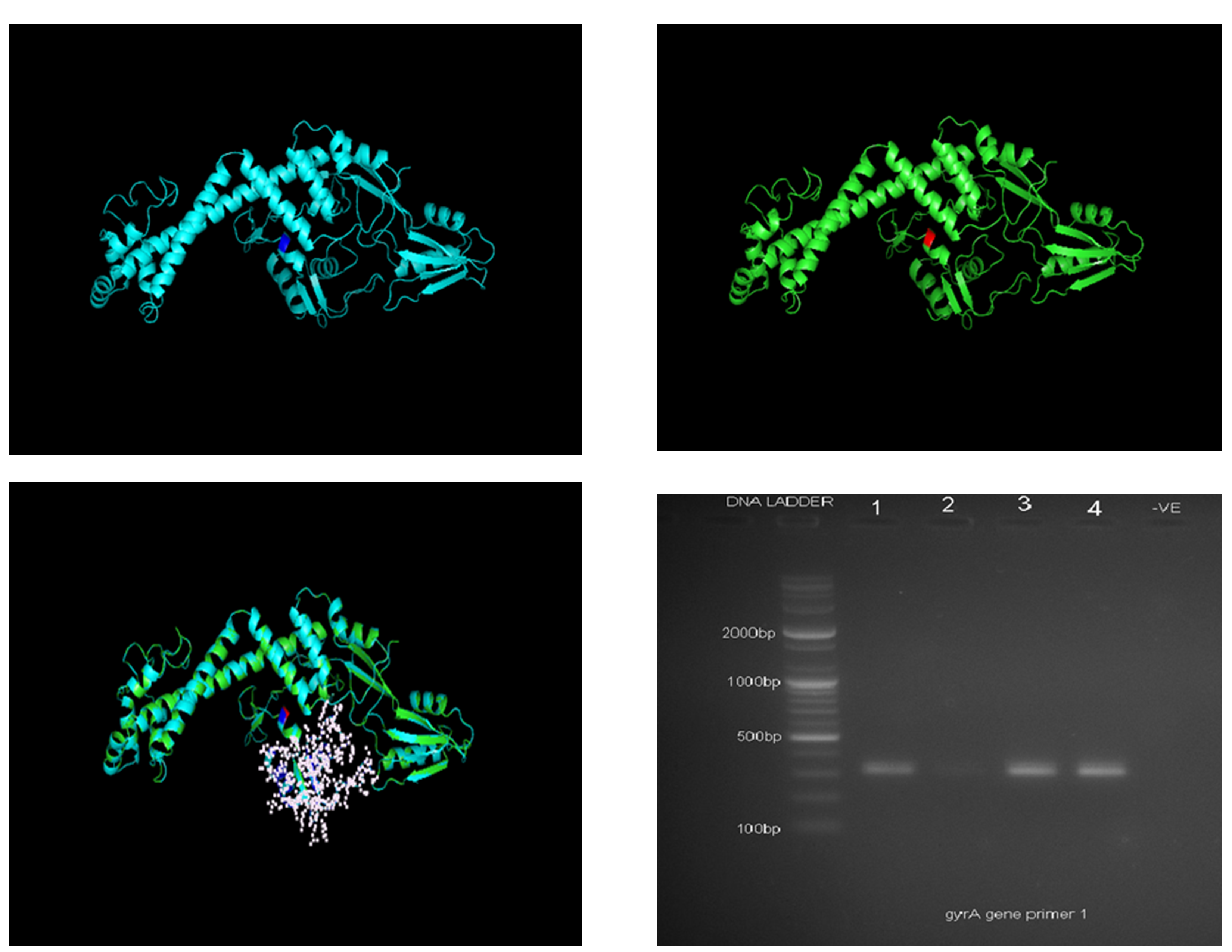
The emergence of fluoroquinolone-resistant Salmonella enterica serovar Typhi poses a serious public health challenge, particularly in developing countries where ciprofloxacin is commonly used for treatment. This study investigated mutations in the quinolone resistance-determining region (QRDR) of the gyrA gene in ciprofloxacin-resistant S. typhi isolates obtained in Sokoto, Nigeria. Four previously identified ciprofloxacin-resistant clinical isolates were subjected to biochemical characterization, minimum inhibitory concentration (MIC) determination, polymerase chain reaction (PCR) amplification, and sequencing of the gyrA gene. MIC analysis revealed varying levels of resistance among the isolates, with values ranging from 2 µg/ml to 512 µg/ml. PCR amplification successfully detected the gyrA gene in all isolates, producing amplicons of approximately 318 base pairs. Sequencing analysis of the amplified gene showed 93% similarity with the reference sequence of Salmonella enterica serovar typhi strain CT18 from the NCBI database. A point mutation was identified at nucleotide position 249 within the QRDR, resulting in an amino acid substitution from Aspartate to Histidine. Structural analysis further indicated that this substitution occurs near the quinolone resistance-determining region, potentially affecting the interaction between DNA gyrase and ciprofloxacin. These findings suggest that mutations in the gyrA gene contribute to ciprofloxacin resistance in S. typhi isolates in Sokoto. Continuous surveillance and molecular characterization of resistant strains are essential to guide effective antimicrobial therapy and control the spread of resistant pathogens.
Downloads
Article Details

This work is licensed under a Creative Commons Attribution-NonCommercial-NoDerivatives 4.0 International License.
References
Ball, P. (2000). Quinolone generations: natural history or natural selection? Journal of Antimicrobial Chemotherapy, 46(Suppl T1), 17–24.
Cheesbrough, M. (2000). District Laboratory Practice in Tropical Countries, Part 2. Cambridge: Cambridge University Press.
Fabrega, A., & Vila, J. (2013). Salmonella enterica serovar Typhimurium skills to succeed in the host: virulence and regulation. Clinical Microbiology Reviews, 26(2), 308–341.
Giraud, E., Brisabois, A., Martel, J. L., & Chaslus-Dancla, E. (2006). Comparative studies of mutations in animal isolates and experimental in vitro- and in vivo-selected mutants of Salmonella spp. suggest a counterselection of highly fluoroquinolone-resistant strains in the field. Antimicrobial Agents and Chemotherapy, 43, 2131–2137.
Griggs, D. J., Gensberg, K., & Piddock, L. J. V. (1996). Mutations in gyrA gene of quinolone-resistant Salmonella serotypes isolated from humans and animals. Antimicrobial Agents and Chemotherapy, 40(4), 1009–1013.
Hooper, D. C., & Jacoby, G. A. (2016). Topoisomerase inhibitors: fluoroquinolone mechanisms of action and resistance. Cold Spring Harbor Perspectives in Medicine, 6(9), a025320.
Laxminarayan, R., et al. (2013). Antibiotic resistance—the need for global solutions. The Lancet Infectious Diseases, 13(12), 1057–1098.
Manga, S. B., & Oyeleke, S. B. (2008). Essentials of Laboratory Practical in Microbiology. Minna, Nigeria: Tobest Publisher.
Murray, C. J. L., et al. (2022). Global burden of bacterial antimicrobial resistance in 2019. The Lancet, 399, 629–655.
O’Neill, J. (2016). Tackling Drug-Resistant Infections Globally: Final Report and Recommendations.
Ochei, J., & Kolhatkar, A. (2000). Medical Laboratory Science: Theory and Practice. New Delhi: Tata McGraw-Hill Publishing Company Limited.
Piddock, L. J. V. (2002). Fluoroquinolone resistance in Salmonella serovars isolated from humans and food animals. FEMS Microbiology Reviews, 26(1), 3–16.
Ruiz, J. (2003). Mechanisms of resistance to quinolones. International Journal of Antimicrobial Agents, 22(4), 335–343.
Singleton, P. (1997). Bacteria in Biology, Biotechnology and Medicine (4th ed.). Chichester: John Wiley & Sons Ltd.
Ventola, C. L. (2015). The antibiotic resistance crisis: causes and threats. Pharmacy and Therapeutics, 40(4), 277–283.
World Health Organization (2023). Global Antimicrobial Resistance Surveillance Report.