

Identification of the Methicillin-Resistant Gene mecA in Staphylococcus aureus Methicillin-Resistant Gene mecA in Staphylococcus
Article Sidebar
Main Article Content
Abstract
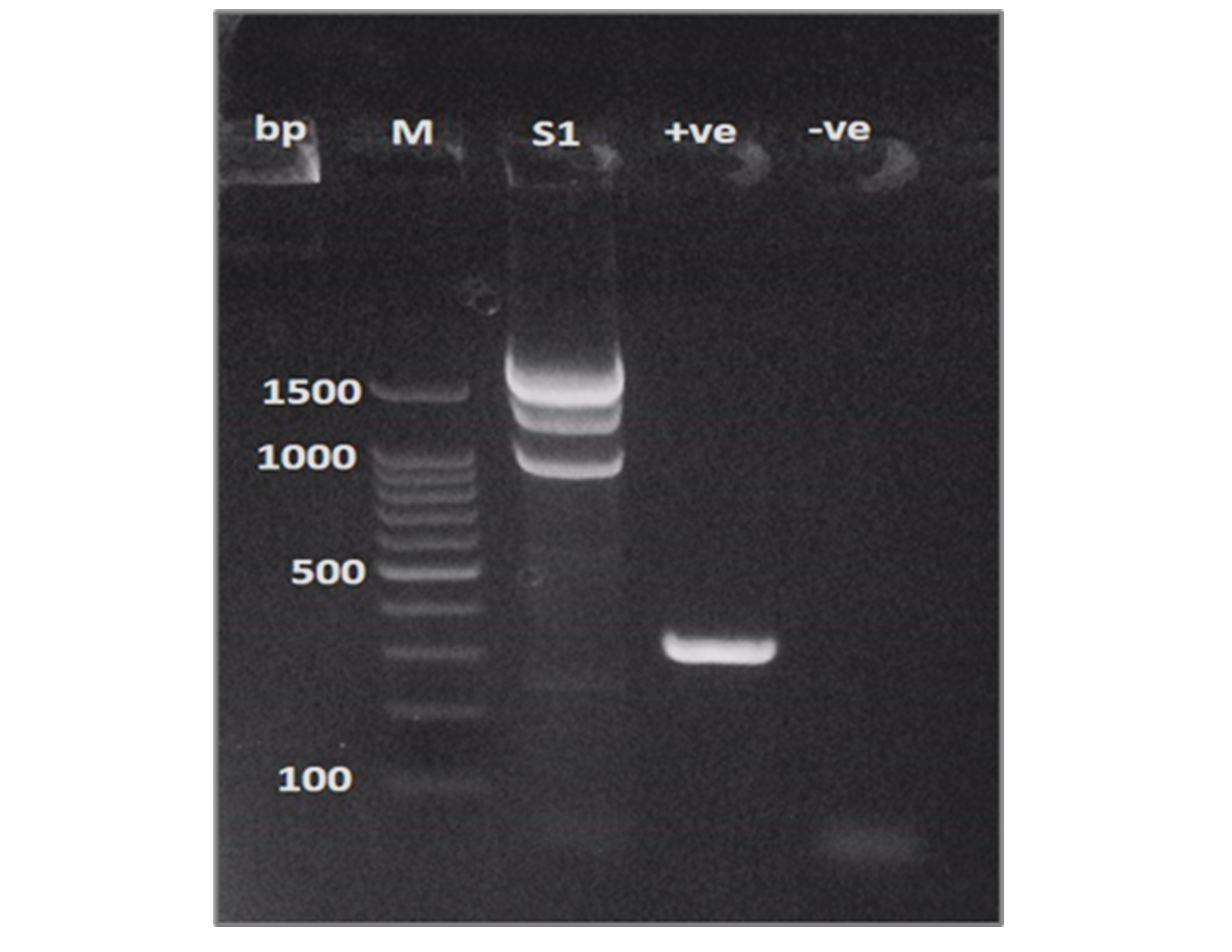
Methicillin-resistant Staphylococcus aureus (MRSA) is a significant public health concern due to its resistance to β-lactam antibiotics and its ability to cause a wide range of infections. This study aimed to detect the presence of the mecA gene responsible for methicillin resistance in Staphylococcus aureus isolates obtained from patients with skin infections. A total of ten (10) swab samples isolates originally collected from patients with urinary skin infections and had been previously processed and stored by our research team was used. Identification of isolates was carried out using colonial morphology, Gram staining, microscopy, and biochemical tests including catalase, coagulase, citrate, and methyl red tests. Antimicrobial susceptibility testing was performed using the Kirby–Bauer disk diffusion method with ampicillin and amoxicillin. Molecular detection of the mecA gene was carried out using Polymerase Chain Reaction (PCR) followed by agarose gel electrophoresis. The antimicrobial susceptibility results revealed that 80% of the isolates were resistant to amoxicillin, while 20% showed resistance to both ampicillin and amoxicillin. PCR amplification targeting the mecA gene (336 bp) showed that none of the tested isolates carried the mecA gene despite some isolates showing phenotypic resistance to β-lactam antibiotics. The absence of the mecA gene in resistant isolates suggests the possible involvement of other resistance mechanisms. Despite existing studies on MRSA, limited molecular data exist on mecA gene prevalence in this region, and discrepancies between phenotypic and genotypic resistance remain poorly understood. This study highlights the importance of combining phenotypic antimicrobial susceptibility testing with molecular techniques for accurate detection of MRSA. The findings also indicate the need for further investigation into alternative genetic mechanisms responsible for methicillin resistance in Staphylococcus aureus.
Downloads
Article Details

This work is licensed under a Creative Commons Attribution-NonCommercial-NoDerivatives 4.0 International License.
References
Andrews, J. M., Ashby, J. P., Jevons, G. M., & Wise, R. (1999). Tentative minimum inhibitory concentration and zone diameter breakpoints for moxifloxacin using BSAC criteria. Journal of Antimicrobial Chemotherapy, 44(6), 819–822.
Ba, X., Harrison, E. M., Edwards, G. F., et al. (2014). Novel mutations in penicillin-binding protein genes in clinical Staphylococcus aureus isolates that are methicillin resistant on susceptibility testing but lack the mec gene. Journal of Antimicrobial Chemotherapy, 69(3), 594–597.
Bignardi, G. E., Woodford, N., Chapman, A., Johnson, A. P., & Speller, D. C. (1996). Detection of the mecA gene and phenotypic detection of resistance in Staphylococcus aureus. Journal of Antimicrobial Chemotherapy, 37(1), 53–63.
Cheesbrough, M. (2000). District laboratory practice in tropical countries (Part 2). Cambridge University Press.
Coico, R. (2006). Gram staining. Current Protocols in Microbiology, A.3C.1–A.3C.8.
Davies, J. A., Anderson, G. K., Beveridge, T. J., & Clark, H. C. (1983). Chemical mechanism of the Gram stain and synthesis of a new electron-opaque marker for electron microscopy which replaces the iodine mordant of the stain. Journal of Bacteriology, 156(2), 837–845.
Ghuysen, J. M. (1994). Molecular structures of bacterial peptidoglycan. In Bacterial Cell Wall (pp. 1–54). Elsevier.
Katayama, Y., Ito, T., & Hiramatsu, K. (2000). A new class of genetic element, staphylococcal cassette chromosome mec, encoding methicillin resistance in Staphylococcus aureus. Antimicrobial Agents and Chemotherapy, 44(6), 1549–1555.
Katayama, S., Tomaru, Y., Kasukawa, T., et al. (2005). Antisense transcription in the mammalian transcriptome. Science, 309(5740), 1564–1566.
Lim, D., & Strynadka, N. C. J. (2002). Structural basis for the beta-lactam resistance of PBP2a from methicillin-resistant Staphylococcus aureus. Nature Structural Biology, 9(11), 870–876.
Lowy, F. D. (2003). Antimicrobial resistance: The example of Staphylococcus aureus. Journal of Clinical Investigation, 111(9), 65–1273.
Oyeleke, S. B., & Manga, S. B. (2008). Essentials of laboratory practical in microbiology. Tobest Publishers.
Pantosti, A., Sanchini, A., & Monaco, M. (2007). Mechanisms of antibiotic resistance in Staphylococcus aureus. Future Microbiology, 2(3), 323–334.
Projan, S. J., & Novick, R. P. (1997). The molecular basis of pathogenicity. In K. B. Crossley & G. L. Archer (Eds.), The Staphylococci in human disease (pp. 55–81). Churchill Livingstone.
Wertheim, H. F. L., Melles, D. C., Vos, M. C., van Leeuwen, W. B., van Belkum, A., Verbrugh, H. A., & Nouwen, J. L. (2005). The role of nasal carriage in Staphylococcus aureus infections. The Lancet Infectious Diseases, 5(12), 751–762